Emerging markets in Asia are experiencing strong momentum in industrial development and infrastructure investment, and these trends continue to reshape the global infrastructure industry. For multinational companies operating in manufacturing, engineering, and industrial technology, this environment is creating new Asian market potential for multinationals as governments expand transport networks, utilities, and industrial corridors as part of broader ASEAN industrial strategy priorities.
However, opportunity alone is not a strategy. Expanding into a new market requires more than reacting to growth signals. Companies are better positioned for success when they can participate confidently, deliver reliably, and build a sustainable long-term presence within the wider context of industrial infrastructure development in Asia.
Why Disciplined Market Selection Matters
Across the region, economic activity and industrial growth can make many markets appear attractive at first glance. But expansion decisions grounded only in momentum may overlook practical realities such as regulatory requirements, procurement structures, or supplier relationships. A disciplined approach encourages organizations to apply structured investment frameworks for industrial players, prioritizing markets where operating conditions and company capabilities align more clearly.
Market Access: “Can we meaningfully participate in this market?”
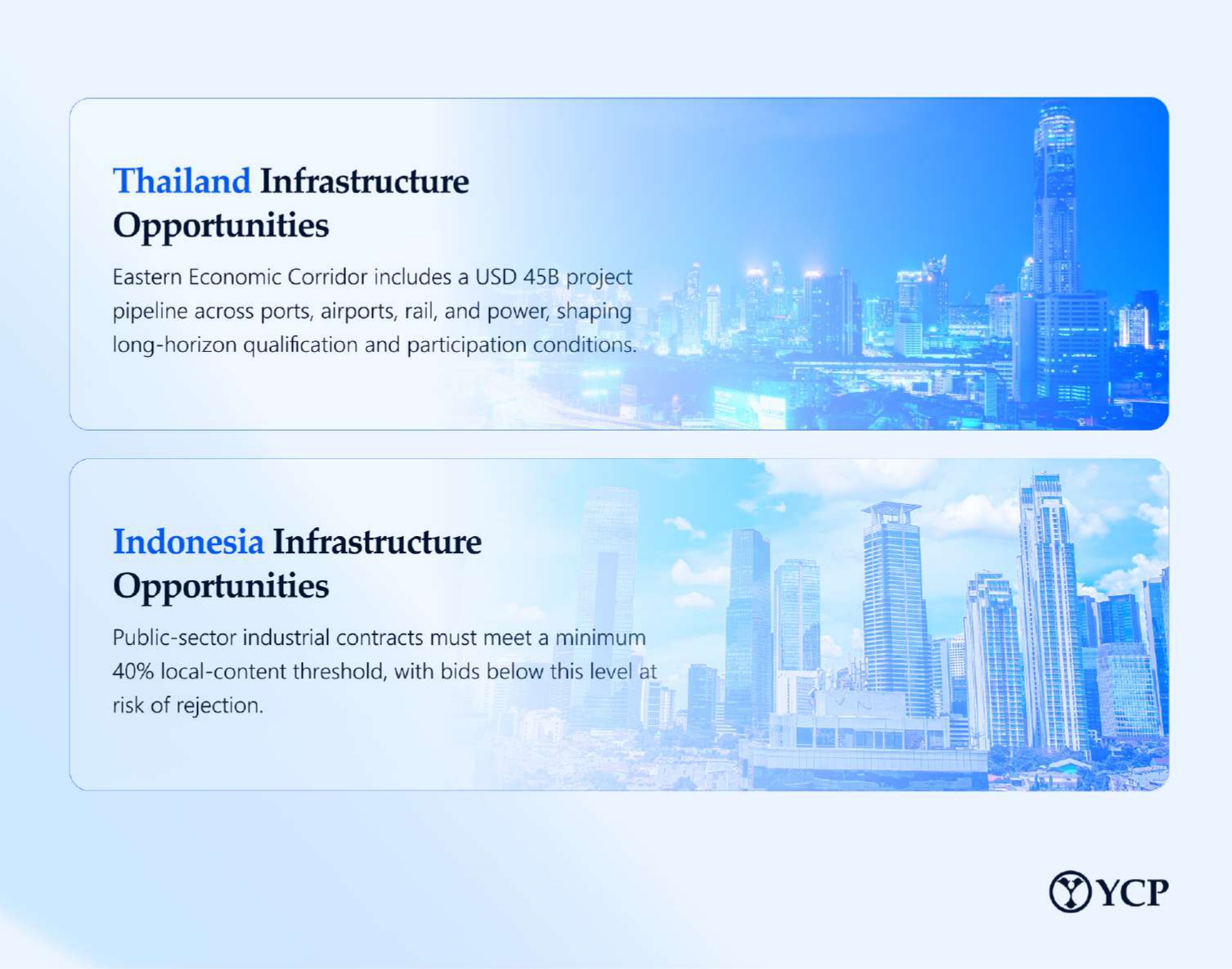
Before a company looks at demand or growth potential, it first needs to understand whether it can realistically participate under local conditions. Access is shaped by factors such as local content rules, technical certification requirements, licensing obligations, and limits on foreign ownership or participation in public tenders. These conditions influence who is eligible to compete, how solutions must be configured, and how long qualification takes.
Evaluating market access early helps organizations avoid situations where opportunity exists in theory, but participation is limited in practice. It also ensures that expansion efforts focus on markets where entry conditions are achievable and commercially meaningful.
 Thailand and Indonesia.jpg 588.05 KBAdvantage Window: “Do we have a real edge in this market?”
Once access is established, companies need to assess whether they bring a meaningful competitive advantage to that market. In many Asian industrial environments, buyers value reliability, lifecycle performance, energy efficiency, and service quality as much as price. Markets that reward these strengths often provide stronger foundations for sustainable growth, particularly for firms pursuing a long-term growth rather than opportunistic entry.
Success is more likely when a company’s strengths align with what buyers in a given market value most. Prioritizing markets where the organization brings distinctive value creates a stronger platform for sustainable growth across Asia’s industrial opportunity set.
 Vietnam and India.jpg 53.47 KBExecution Elasticity: “Can we deliver and scale effectively in this market?”
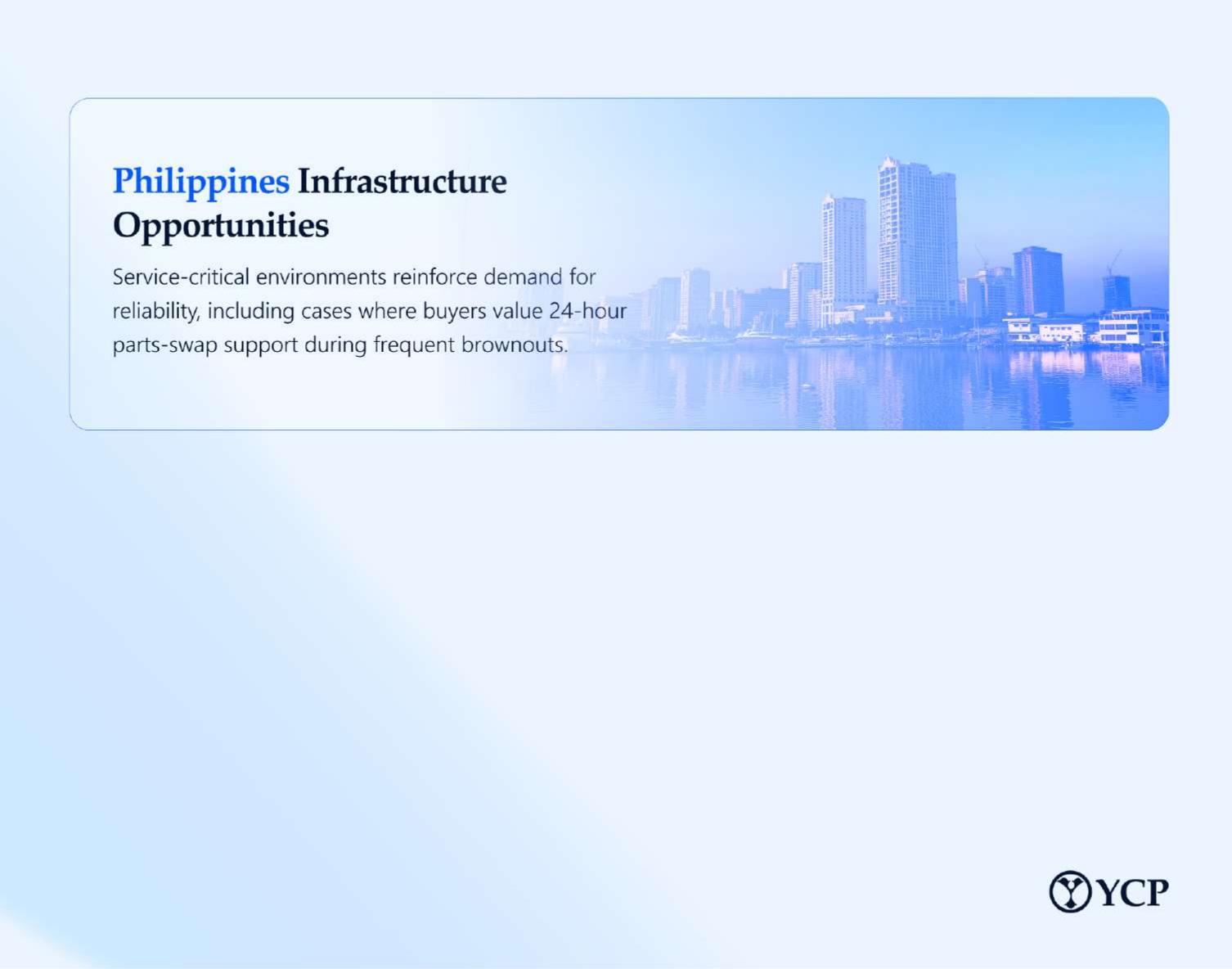
Finally, even when access and competitive fit look promising, expansion still depends on whether the organization can support operations reliably on the ground. Many projects in emerging Asia require responsive service capability, locally available expertise, and the capacity to manage documentation, compliance, and customer expectations over time.
Winning contracts is only the first step. What determines long term success is the ability to maintain performance and support customers consistently. Companies need to consider whether they have, or can develop, the operating capabilities required to scale without overextending resources.
 Philippines.jpg 283.57 KBSupporting Expansion Outcomes
Looking at markets in Asia, market potential for multinationals has moved from opportunity-driven expansion to more intentional decision-making. Instead of treating every fast-growing economy as an equal prospect, approaching it this way encourages companies to focus on places where access conditions are realistic, competitive strengths are genuinely valued, and operational delivery can be sustained over time. This makes it easier to prioritize markets where access conditions are realistic, competitive strengths are relevant, and operational delivery can be sustained over time.
From Opportunity to Sustainable Growth
Expansion into emerging Asian markets can open meaningful opportunities, but success depends on more than simply following growth trends. The companies that tend to build lasting positions are those that enter markets where they can participate with confidence, compete on their strengths, and support customers consistently over time.
Treating market selection as a disciplined strategic choice allows organizations to direct resources toward places where they are genuinely positioned to succeed, creating a foundation for stronger and more sustainable growth.