When MRT Jakarta entered the post-pandemic recovery period, the challenge was larger than restoring ridership. The city’s rail operator was navigating declining mobility, pressure on non-ticketing revenue, and the urgent need to unlock long-term value from transit-oriented development (TOD) rights granted by the Jakarta government. At the same time, it was preparing for the next phase of network expansion, a critical step in shaping Jakarta’s future mobility landscape.
Since 2021, Dr. Farchad Mahfud has been part of the leadership team guiding this transition. With a PhD in Chemical Engineering and a professional background spanning energy and infrastructure, he brings a systems-level perspective to urban transport. He sees rail transit not as a standalone service, but as a key node in the broader energy, mobility, and urban development ecosystem. His role, as he describes it, is that of a “debottlenecker” — focused on resolving structural challenges that limit institutional and societal progress.
Today, MRT Jakarta operates under the vision of “Increasing Mobility, Improving Life Quality,” expanding its role beyond transportation into urban regeneration and metro-linked lifestyle ecosystems. This means building resilient business models beyond fare revenue, advancing TOD as a catalyst for city development, and accelerating rail expansion through innovative partnership and financing approaches.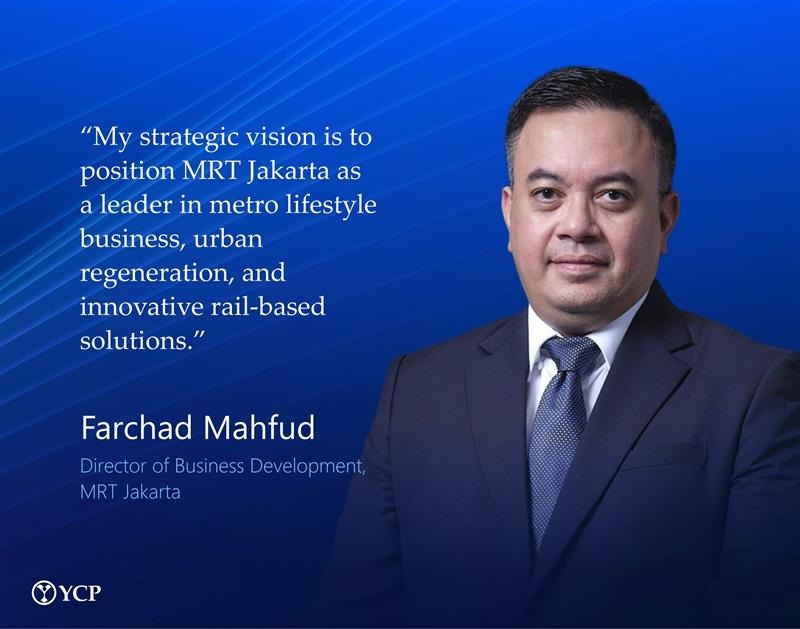 YCP Jakarta mobility Quote Card 1.jpg 65.71 KBThe following conversation between Dr. Farchad Mahfud and YCP Managing Partner and Southeast Asia Regional Manager Karambir Anand explores how these priorities are shaping MRT Jakarta’s next phase of growth, and what it will take to deliver a more connected, sustainable urban future.
 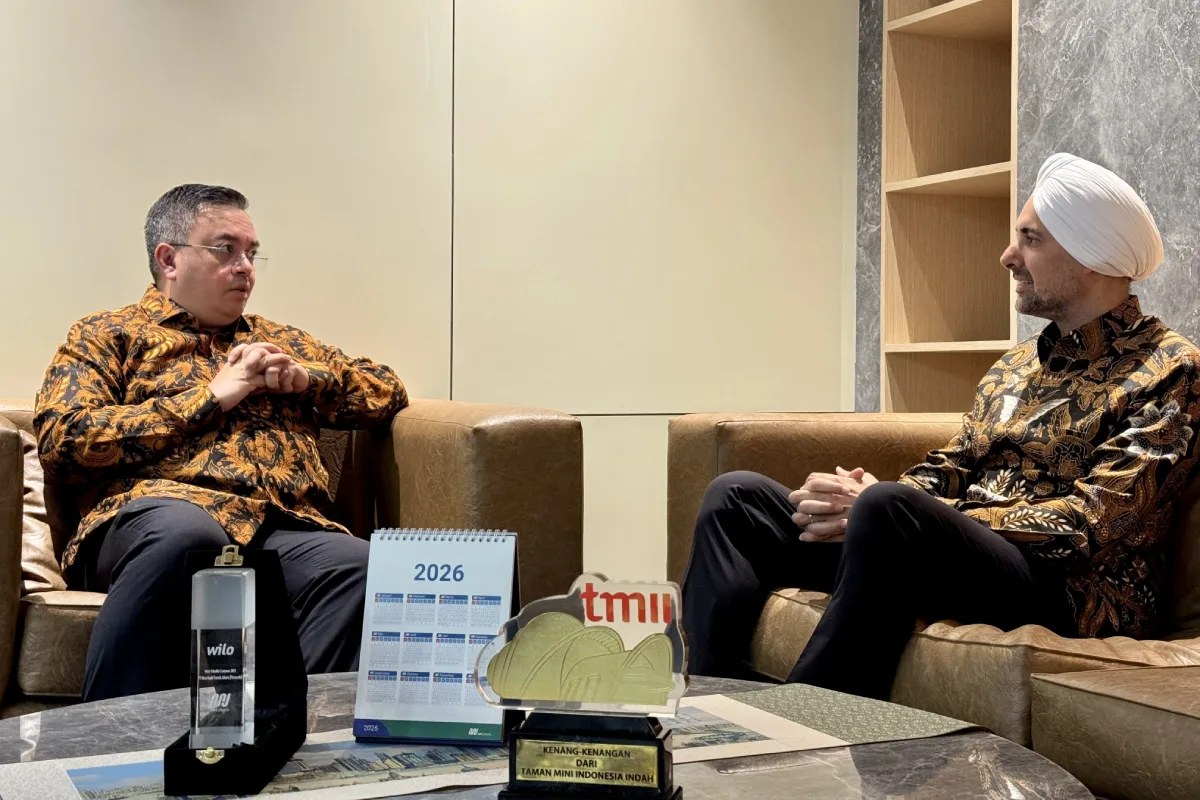 Dr. Farchad Mahfud, Director of Business Development, MRT Jakarta, in discussion with Karambir Anand, YCP Managing Partner and SEA Regional ManagerDr. Farchad Mahfud, Director of Business Development, MRT Jakarta, in discussion with Karambir Anand, YCP Managing Partner and SEA Regional Manager
On shaping a commercial mindset within a public mandate
Karambir Anand: MRT Jakarta operates as a public entity while also being expected to perform with commercial discipline. How are you strengthening decision-making and risk appetite, and where do you see the biggest friction between these two roles?
Farchad Mahfud: MRT Jakarta was established not only to operate an urban rail system, but to encompass the full rail value chain. Our mandate spans infrastructure and facilities operations, as well as property and business development around stations and depots.
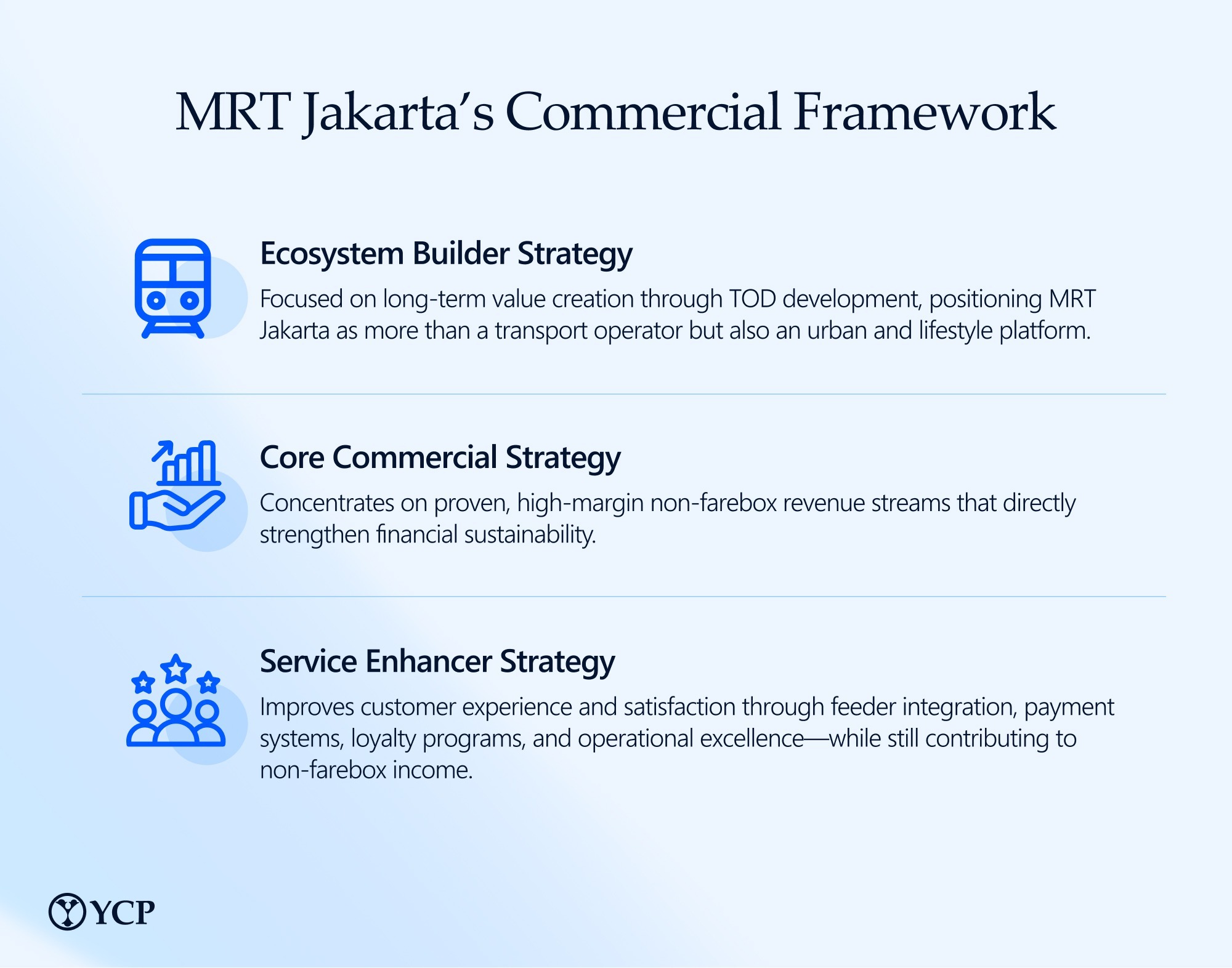
Because of this dual responsibility, commercial discipline is not separate from our public mandate. To support this, we structured our approach around three strategic initiatives to guarantee that revenue growth supports long-term sustainability.
 Callout Box 1 - Commercial Framework.jpg 289.75 KB
On COVID recovery and redefining the business model
Karambir Anand: During the COVID period, what were your top priorities in stabilizing the business, and how did you balance quick wins with longer-term transformation?
Farchad Mahfud: In the post-COVID period, we made a clear strategic decision that cascaded across the organization. It was centered on three transformation axes designed to move the business beyond its traditional operating model.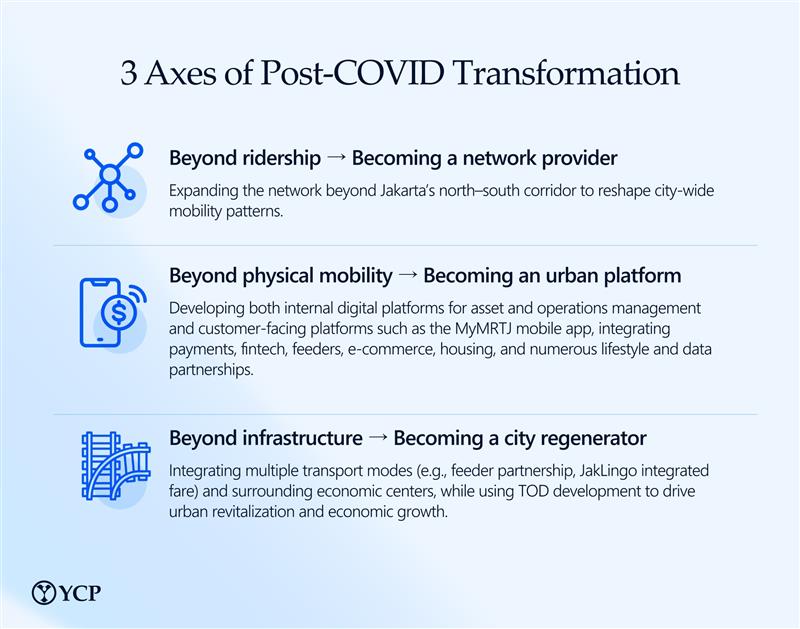 Callout Box 2 - 3 Axes.jpg 65.36 KB
On non-farebox growth and financial sustainability
Karambir Anand: How do you frame the role of non-farebox revenue going forward, and what is your realistic aspiration for the farebox versus non-farebox mix over the next 5-7 years?
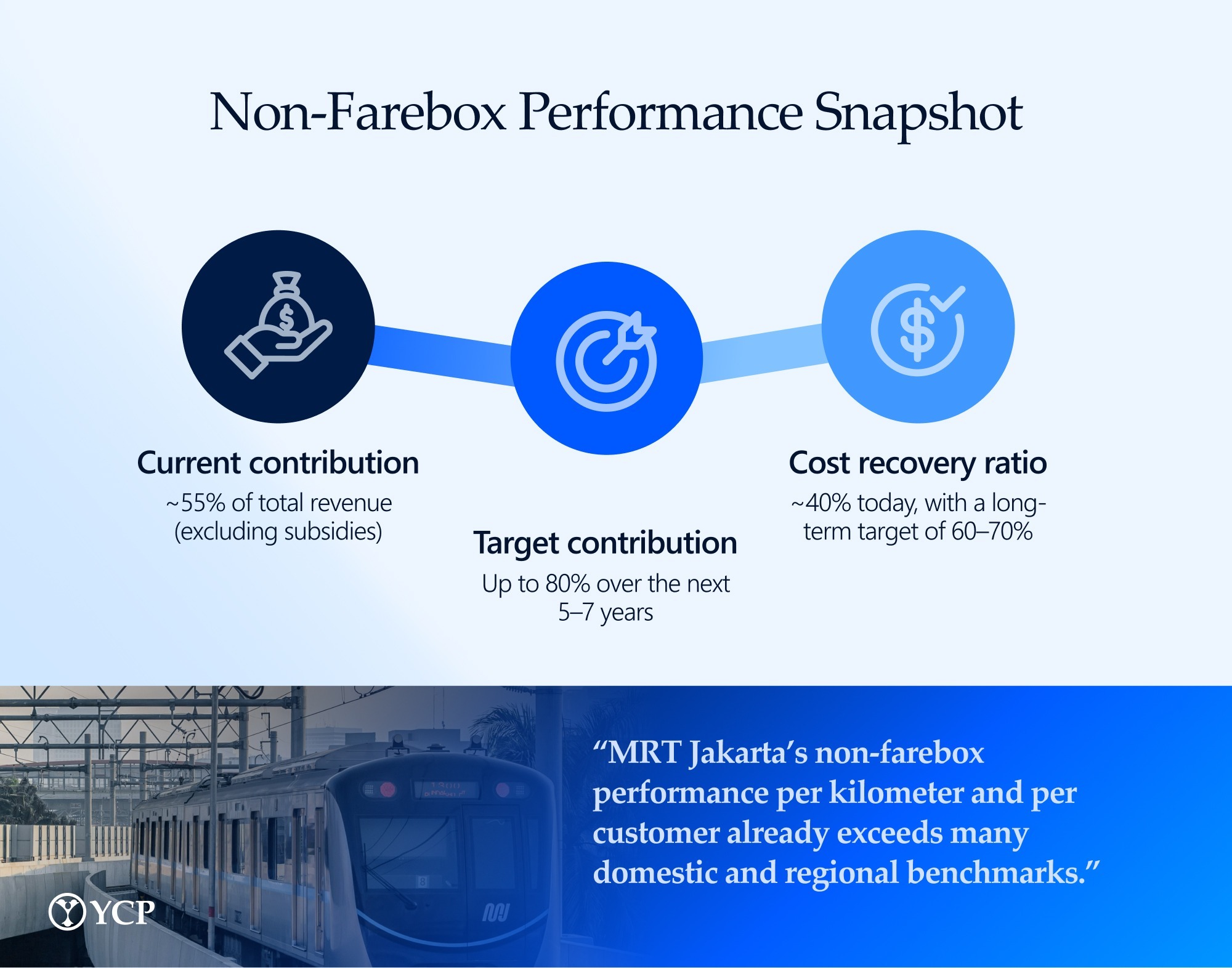
Farchad Mahfud: MRT Jakarta has built a strong non-farebox revenue base compared with other public transport operators, both in Indonesia and across the region. Even with a relatively short, 16-kilometer network today, the non-farebox revenue generated per kilometer is already higher than most domestic peers and in line with leading regional metro systems.
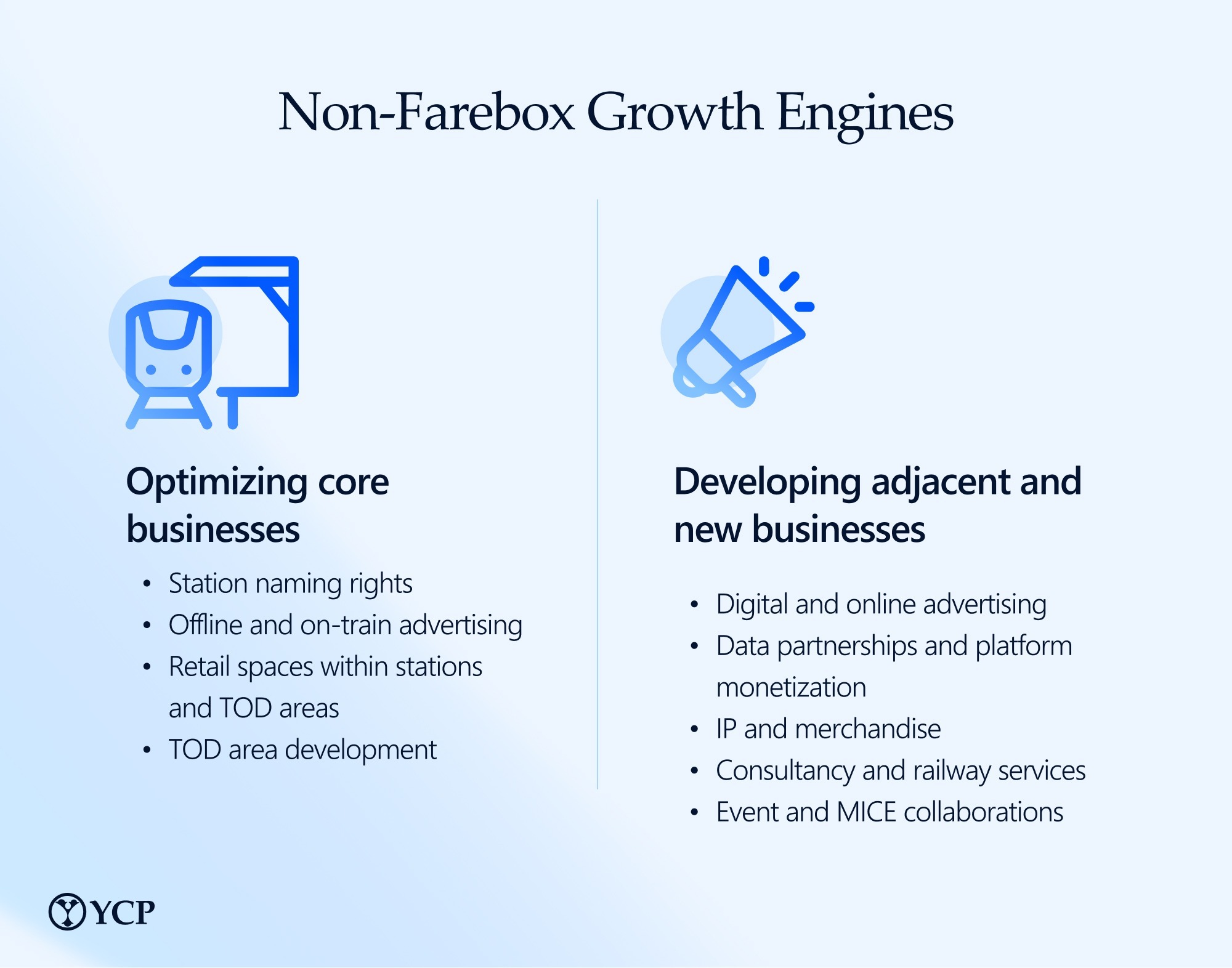
Looking ahead, non-farebox revenue is expected to grow further, reaching up to 80% of total revenue outside of public service obligation subsidies. This growth will not rely on a single initiative, but on a portfolio of businesses.
 Callout Box 3 - Non Farebox Performance Snapshot.jpg 362.84 KB
 Callout Box 4 - Non Farebox Growth Engine.jpg 234.61 KB
On private capital and financing innovation
Karambir Anand: You are pursuing private capital for future extensions such as the Lebak Bulus–Serpong line. What are the biggest risks and opportunities, and how would you persuade investors to bet on Jakarta’s MRT?
Farchad Mahfud: Railway financing in Indonesia has been almost entirely government-led. Through proposed private contribution schemes, such as PPP arrangements or land-based funding, we want to reduce the government’s fiscal burden while accelerating railway network expansion. These initiatives are developed with relevant national agencies, such as the Ministry of Transport, the Jakarta Transport Agency, among others.
For private investors, the opportunity lies in land value capture and long-term returns driven by high transit demand. For government, private participation helps ease fiscal pressure and supports faster transportation connectivity and economic growth.
The challenge is alignment. As this is still a relatively new model in Indonesia’s railway sector, coordinating public and private objectives will take time.
On strategic partnerships
Karambir Anand: How do partnerships, such as with Alstom or AFD, support MRT Jakarta’s next phase of growth?
Farchad Mahfud: We always pursue strategic partnerships not only in construction and technical operations and maintenance, but also across business development. The reason is that these collaborations create multiple strategic advantages, such as leveraging complementary expertise, reduced costs, and the overall expansion of the business ecosystem. Ultimately, these partnerships help build a strong and shared commitment to growth.
On TOD as a driver of urban regeneration
Karambir Anand: What is your vision for MRT Jakarta’s TOD projects, such as the Bundaran HI development, and how do you see them shaping Jakarta’s urban landscape?
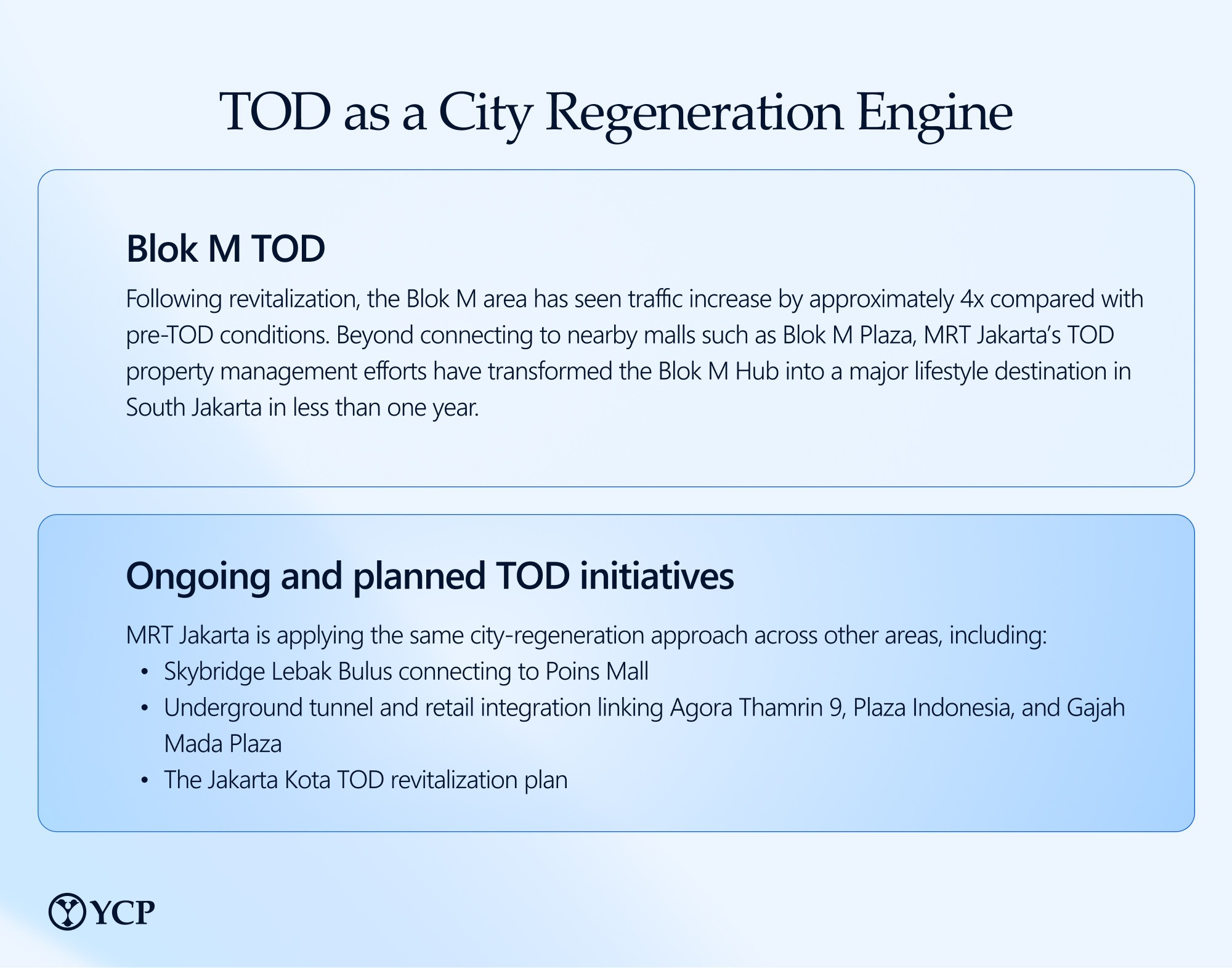
Farchad Mahfud: This approach aligns with our third business transformation axis: moving beyond transport network expansion—from being an infrastructure provider to becoming a city regenerator.
MRT Jakarta aims to integrate not only physical infrastructure, but also multiple transportation modes—such as feeder partnerships and the JakLingko integrated fare system—as well as surrounding economic centers, including shopping malls and office buildings. At the same time, we develop transit-oriented development (TOD) areas to support city revitalization and drive economic growth.
Our objective is not to develop TODs solely for transit purposes, but to make the city and its economy alive again.
 Callout Box 5 - TOD as City Regenerator.jpg 319.79 KB
On long-term expansion
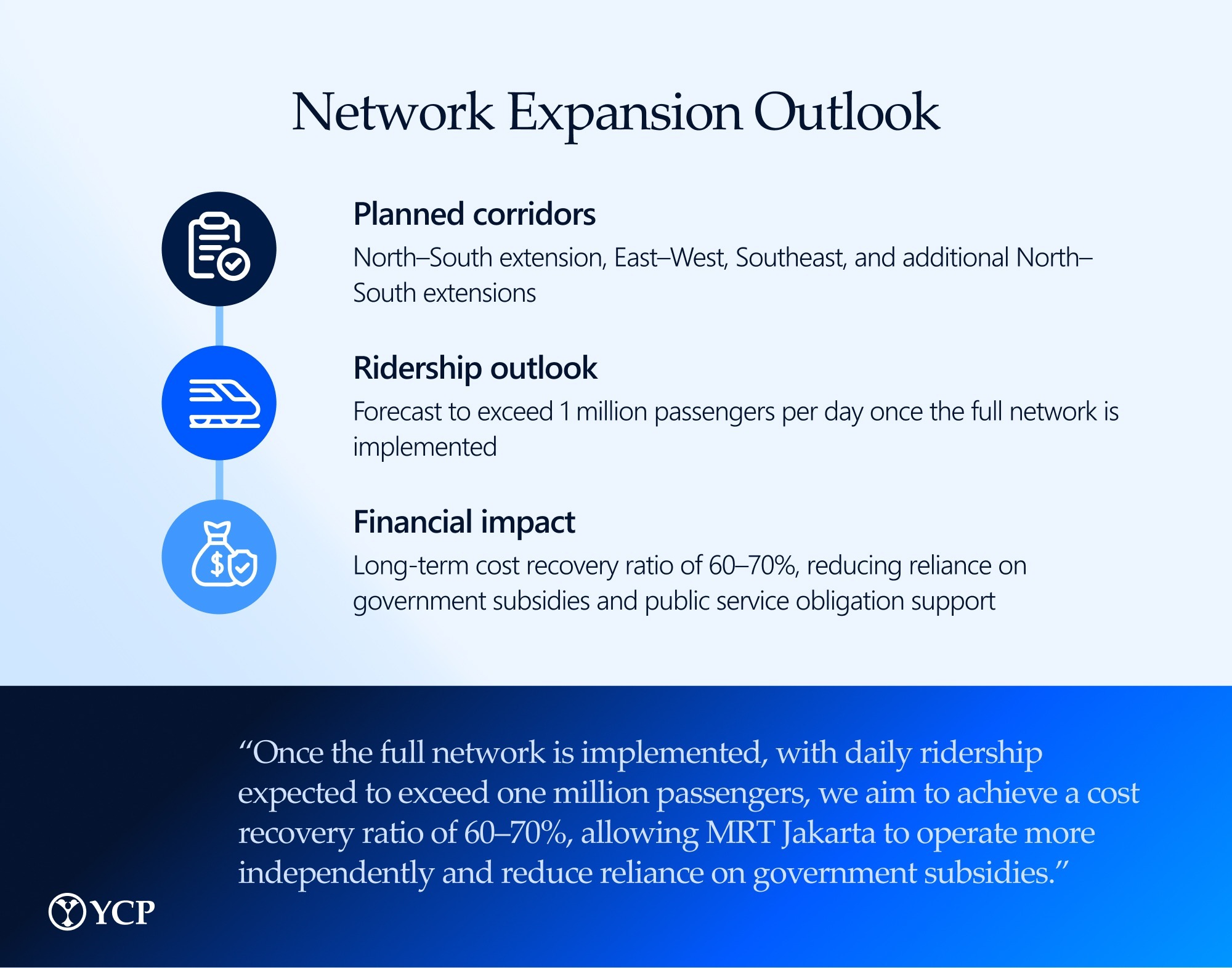
Karambir Anand: What are your strategic priorities for MRT Jakarta’s network expansion, and how will future lines reshape ridership, farebox recovery, and the overall business model?
Farchad Mahfud: Network expansion is a central priority for MRT Jakarta, both to improve city-wide connectivity and the long-term sustainability of our business model. Through proposed private contribution schemes, we aim to reduce the government’s fiscal financing burden while accelerating railway network expansion.
These initiatives are in compliance with guidelines of course from the Ministry of Transport, the Jakarta Transport Agency, the National Planning Agency, and the Jakarta Planning Agency.
 Callout Box 6 - Network Expansion Plan.jpg 352.64 KB
On regulatory and stakeholder dynamics
Karambir Anand: What regulatory or institutional hurdles have you encountered across Jakarta’s multi-stakeholder environment, and how do you navigate them?
Farchad Mahfud: Currently we don’t face major regulatory or institutional hurdles, since we have routine and intense coordination with key stakeholders. These include the Ministry of Transport, Jakarta government agencies, BUMDs, BUMNs, our main shareholder, which is the Jakarta Provincial Government, and private-sector partners.
On innovation and technology
Karambir Anand: How do you see technology—such as MRT Jakarta’s TRAMS innovation—driving future service improvements, and which innovations excite you most?
Farchad Mahfud: As part of our second business transformation axis, we are evolving from a purely physical transport platform into a broader urban platform.
This means that MRT Jakarta is building digital capabilities to support operational efficiency and create new business opportunities through both internal and customer-facing platforms.
For internal platforms, the focus leans towards managing soft assets and operations, as well as digital innovations to optimize processes.
With customer-facing platforms, we can leverage the MyMRTJ mobile app and its integration with digital partners, including fintech, payments and ticketing, and lifestyle offerings.
On legacy and impact
Karambir Anand: Looking ahead, what legacy do you hope to leave at MRT Jakarta, and what critical success factors must be achieved to realize that vision?
Farchad Mahfud: Over the next 5 to 10 years, our aspiration is for MRT Jakarta to evolve into a stronger and more independent corporation—one that can consistently deliver dividends to the Jakarta Provincial Government as our main shareholder. To get there, we need to continue strengthening our core operations, particularly in areas such as asset management and system integration.
From a commercial perspective, we aim to double or even triple our non-farebox revenue per kilometer, while maintaining steady annual growth of around 3–5%. We also plan to increase the consolidated contribution of TOD-related non-farebox revenue by 60%.
At the same time, accelerating the development of the East–West and North–South lines remains important. As the network expands, we are targeting a funding structure where roughly 40% comes from private-sector participation, reducing reliance on government financing over time.