India’s logistics market is expanding quickly, but the more consequential shift may be happening beneath the headline growth. YCP’s white paper, “India’s Logistics Industry: Mapping Growth and Value Creation Pathways,” highlights how India’s push into electronics, pharmaceuticals, semiconductors, and other high-value sectors is changing the demands placed on logistics networks. As production scales in these industries, the goods moving through them are becoming more sensitive, regulated, and time-critical.
For the Indian logistics industry, that changes the basis of competition. Capacity and coverage still matter, but providers will increasingly need the infrastructure, processes, and expertise to support more demanding supply chains. India logistics market growth, in other words, is becoming as much a capability story as a volume story.
From Commodity Freight to Specialized Supply Chains
The white paper describes India’s logistics sector as moving through a broader maturity shift: from basic, point-to-point freight movement toward integrated networks, industry-specific handling, high-precision logistics, and eventually more intelligent supply chain orchestration.
This evolution matters because higher-value industries place very different demands on the India logistics value chain. Moving standardized consumer goods is not the same as supporting pharmaceuticals, electronics, or semiconductor production, where reliability, traceability, handling standards, and tighter operating tolerances become more important.
As India’s industrial mix becomes more sophisticated, logistics providers will increasingly be judged not only by how much freight they can move, but by how well they can meet the requirements of specific sectors. In that environment, specialization becomes less of a niche offering and more of a competitive capability.
What Specialization Looks Like in Practice
The shift is especially visible in sectors where logistics performance is tightly linked to product quality and business continuity. India’s semiconductor market, for example, is projected in the white paper to reach USD 110 billion by 2030. Supporting that growth requires more than standard transport and storage: providers may need cleanroom-compatible warehousing, temperature and humidity controls, vibration-sensitive transport, and secure handling for high-value components.
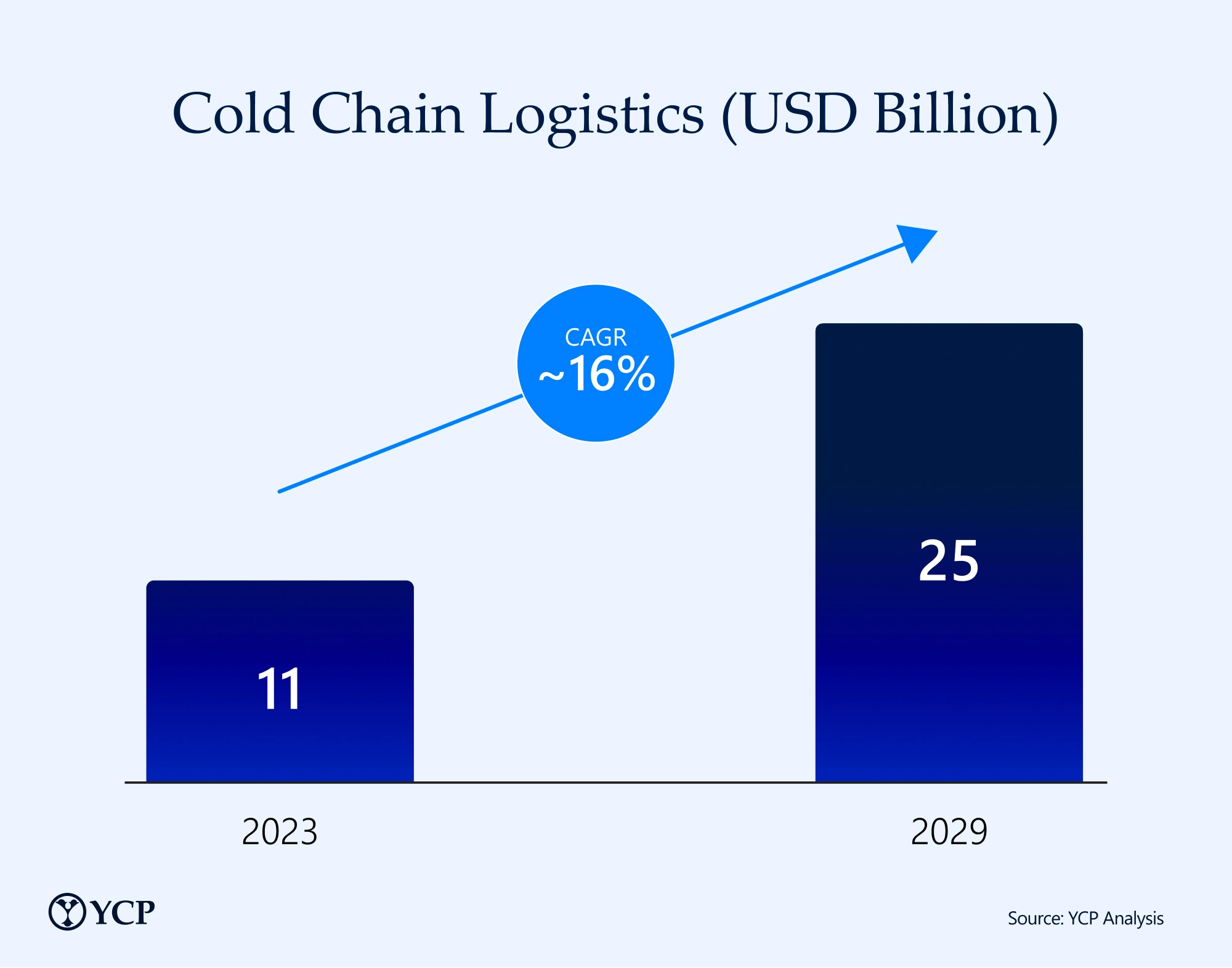
Cold chain offers a similar example. The report projects the segment to grow at roughly 16% annually, supported by rising demand from pharmaceuticals and food transportation. These requirements place greater pressure on logistics infrastructure in India to deliver consistent conditions, stronger monitoring, and reliable handoffs across the journey.
In both cases, the opportunity is not simply to add more capacity. It is to build infrastructure and operating capabilities that can meet the specific requirements of higher-value industries, where service failure carries a much higher cost.
Capability Becomes the Differentiator
For logistics providers, this shift changes where investment can create competitive advantage. Physical assets remain important, but specialized sectors also require capabilities around compliance, monitoring, traceability, workforce expertise, and consistently reliable operating processes. Technology increasingly supports that equation as well, with the white paper highlighting tools such as real-time visibility platforms, warehouse management systems, automation, and advanced analytics for more precise supply chain control.
For businesses assessing India supply chain investment, the implication is that logistics capability should be evaluated alongside capacity. Providers able to demonstrate sector-specific expertise and tighter operational control may be better positioned to support industries where delays, handling errors, or environmental deviations can carry significant costs.
The Next Phase of Logistics Growth
The Indian logistics market outlook is therefore about more than expanding freight volumes or adding capacity. As India moves further into high-value manufacturing, the logistics capabilities supporting that growth will need to advance with it.
For providers, some of the most attractive logistics sector opportunities in India may emerge where industry requirements are hardest to meet. Building the expertise, infrastructure, and operational discipline to serve these specialized supply chains can create a stronger competitive position than competing on scale alone.
Download YCP’s white paper, “India’s Logistics Industry: Mapping Growth and Value Creation Pathways,” to learn more about how these shifts are creating new opportunities across logistics infrastructure, distribution, and services.