For companies preparing to go public in Southeast Asia, most of the focus goes toward internal readiness: financials, governance, and growth story. The question of where to list tends to be treated as a formality. Across the IPO landscape in Southeast Asia, that assumption is increasingly costly.
The IPO market outlook across markets like Indonesia, Malaysia, Singapore, Thailand, and Vietnam shows that listing options are expanding, and with them, the strategic stakes of choosing the right venue. According to YCP's white paper, “Southeast Asia IPO Landscape: Building Readiness for Long-Term Success,” the choice of listing locations directly affects valuation, investor mix, and post-IPO capital flexibility. The exchange a company selects deserves the same rigor as the IPO preparation process itself.
A Case Study in Strategic Repositioning
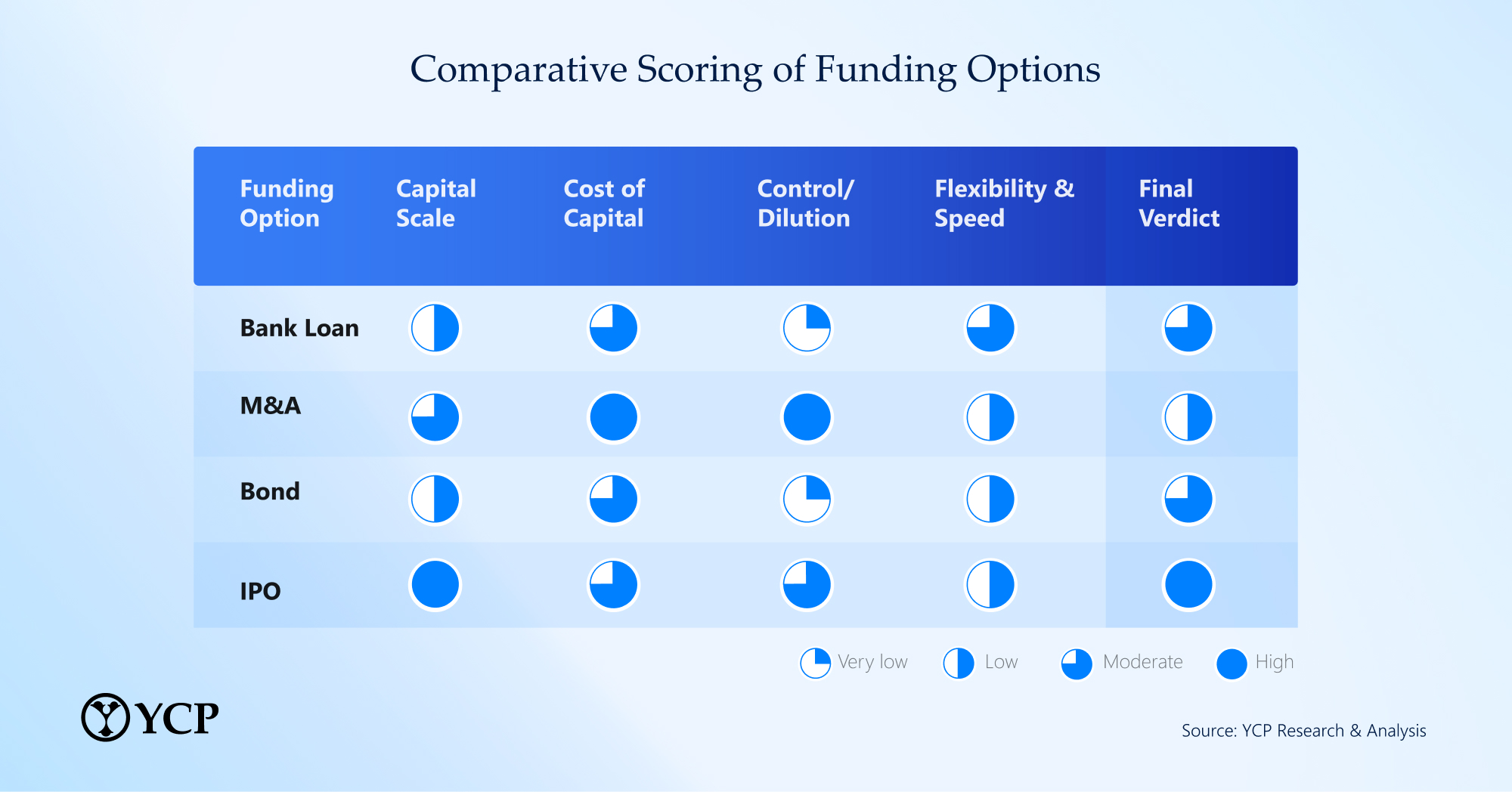
A Philippine-based company that chose to list on the Singapore Exchange (SGX) rather than its domestic market offers a useful IPO case study in how Southeast Asian firms are beginning to treat venue selection as a deliberate strategic decision rather than a geographic default. The company reasoned that SGX could offer what its home market could not: stronger governance standards, greater regulatory credibility, and a framework better suited for cross-border financing and regional expansion. For a business with ambitions beyond its home market, those factors outweighed the familiarity of listing locally.
The decision came with real trade-offs. SGX's disclosure and compliance requirements demanded substantial investment in internal controls, reporting processes, and investor relations capabilities. Liquidity, while institutionally solid, was thinner than on larger global exchanges. The company also had to invest time and resources in educating international investors on the specific dynamics of the Philippine market, something a domestic listing would not have required.
What the case ultimately demonstrates is that venue selection is a decision shaped by where a company wants to go, not just where it currently operates. The right exchange is the one that best supports the company's long-term capital strategy and investor ambitions.
What Venue Selection Actually Requires
Choosing a listing venue has direct operational consequences that feed into the IPO readiness roadmap. Different exchanges impose different standards around financial reporting, board composition, disclosure frequency, and investor relations, and companies need to build toward those standards well before the listing date.
The location decision needs to be made early in the IPO preparation process rather than after internal readiness work is already underway. Venue selection and IPO preparation are not sequential decisions; they are deeply interconnected, and the choice of exchange should inform how a company structures its entire readiness program from the outset.
What SEA Companies Should Be Asking
As the IPO market outlook across Southeast Asia continues to evolve, companies approaching a listing should be pressure-testing their venue assumptions early. The right questions go beyond which exchange is most familiar or accessible. They include how well the exchange serves the company's target investor profile, whether the regulatory framework aligns with its governance trajectory, and what the post-IPO ecosystem looks like in terms of analyst coverage and follow-on capital access.
Country-level factors matter too. Global ratings frameworks such as MSCI assess governance quality and regulatory transparency at the market level, and these ratings shape how international institutional investors perceive listed companies. A company listing in a market with stronger institutional credibility will generally find it easier to attract and retain long-term investors that support sustained valuation.
The Stakes of Getting It Right
The listing venue shapes not just the IPO outcome but the company's identity and credibility as a public entity. In a region where regulatory reforms and expanding exchange options are giving companies more choice than ever, defaulting to the most familiar option is no longer a sufficient basis for the decision.
Companies that treat venue selection with the same discipline as their internal readiness work are better positioned to attract the right investors, sustain valuation of post-listing, and access capital efficiently over the long term. For a deeper look at what IPO readiness requires across Southeast Asia's capital markets, read YCP's white paper, “Southeast Asia IPO Landscape: Building Readiness for Long-Term Success.”