JAKARTA, October 2026 — YCP has released a new white paper, “Powering Indonesia’s Aluminum Downstreaming Opportunity: The Next Step in Bauxite Value Capture,” examining how the country can capture greater value across the Indonesia aluminum value chain by expanding further downstream into primary aluminum smelting. The report identifies reliable, scalable, and competitive power as a key factor shaping the next phase of the industry.
With Indonesia bauxite reserves estimated at roughly 1 billion tonnes, the country ranks among the world’s leading reserve holders. Yet before the 2023 raw-bauxite export ban, Indonesia ranked as the world’s third-largest exporter of raw bauxite but only 33rd in aluminum exports, highlighting a significant gap in domestic value capture.
Alumina refining capacity has expanded rapidly, rising from approximately 1.4 million tonnes in 2021 to 3.9 million tonnes in 2023. The white paper argues that the next major opportunity for Indonesia aluminum downstreaming lies in converting this growing alumina base into primary aluminum and selected fabricated products.
Primary aluminum smelting requires roughly 13–15 MWh of electricity per tonne of metal, with power accounting for around 30–40% of total cash cost. According to the report, the competitiveness of Indonesia aluminum smelters will depend heavily on securing reliable, scalable, and low-cost electricity over the long term.
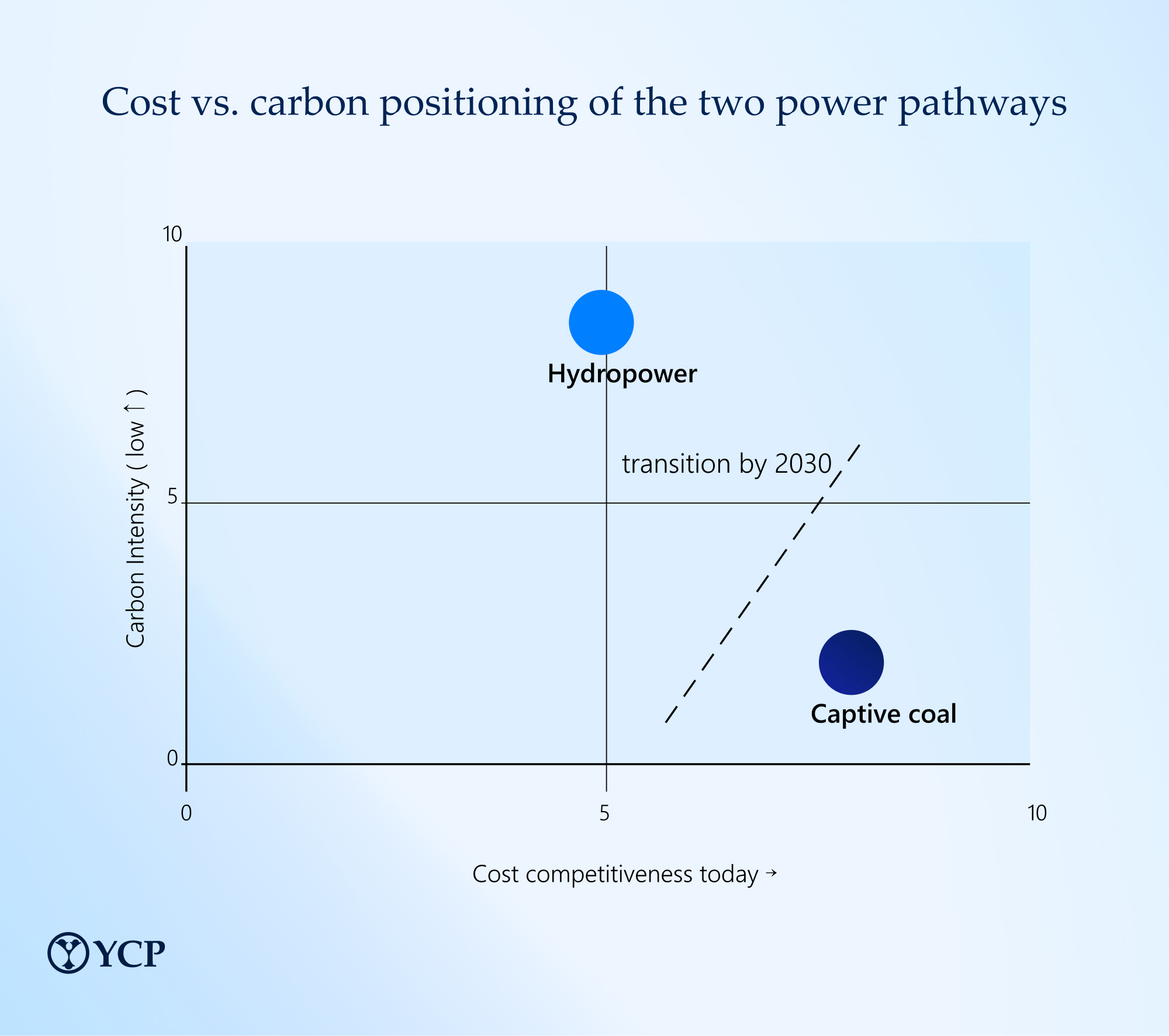
“Whoever pairs Indonesian alumina with low-cost, scalable, and progressively lower-carbon power will hold one of the most attractive cost-carbon positions in Asian aluminum,” says Dhendy Rizki Fadhillah, Partner at YCP.
The report also highlights the growing importance of carbon intensity, noting that power source will increasingly influence both production economics and access to carbon-sensitive markets. It points to a phased power strategy that balances near-term competitiveness with progressive decarbonization.
Read and download the full white paper here.