
TOKYO, September 2026 — NTT DATA INTELLILINK Corporation (NDI), YCP, and AI Brain Partners (ABP) have released a joint white paper, “System Integration in the Generative AI Era: How AI Agents Are Redefining Delivery, Governance, and Talent.” The report examines how enterprise AI adoption is changing the role of system integration and identifies the strategic priorities organizations should consider as AI agents become part of everyday business operations.
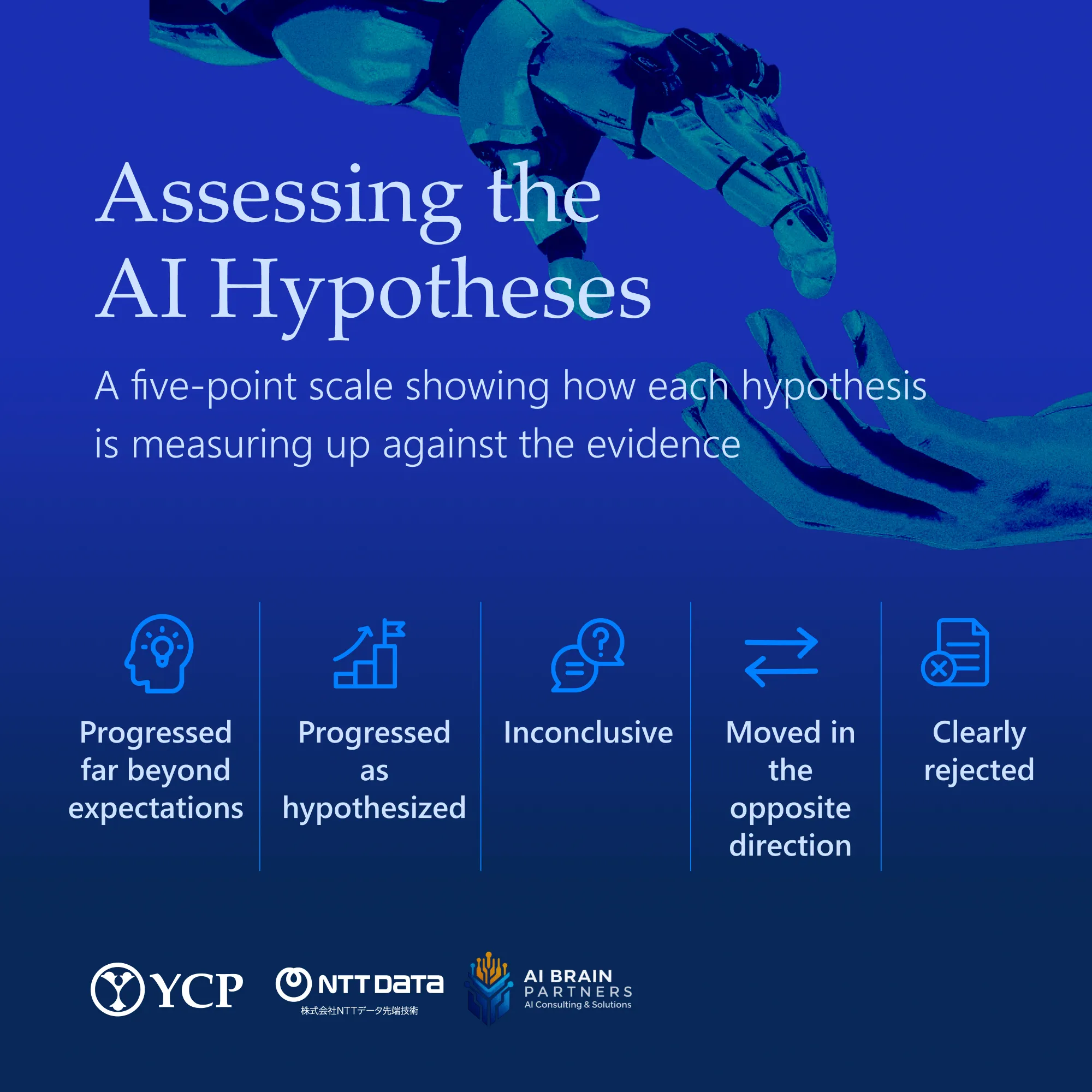
Building on seven hypotheses developed in early 2026 and assessed against recent developments using a five-point scale, the white paper argues that the conversation around AI is moving beyond model capability and development speed. Increasingly, organizations must establish an AI agent control plane that supports AI agent permissions management, operational oversight, and a reliable AI agent audit trail, while also addressing platform dependence and industry-specific implementation as they deploy AI at scale.
The report also highlights a broader shift taking place outside the enterprise. As governments introduce export controls, sovereignty requirements, and national security measures that affect access to advanced AI models, technology decisions are becoming closely linked with geopolitical considerations. Choosing an AI platform is no longer solely a technical or commercial decision, increasing the importance of AI model portability, business continuity, compliance, and long-term strategy.
"The question is no longer whether to use AI. The real question is far more specific: Which platforms will you depend on? In what contexts will you implement them? How quickly can you provide assurance? And who will you develop to lead over the next five years?"
The white paper is the first installment in a three-part publication series that revisits hypotheses developed by NDI, YCP, and AI Brain Partners. Each white paper measures the hypotheses against real-world developments, and explores the implications for business leaders as enterprise AI continues to mature.
Read and download the full white paper here.