MUMBAI, JUNE 2026 – YCP has released a new white paper titled “Unlocking India’s Nuclear Sector: Commercial Opportunities Created by the SHANTI Act.” The report examines how India’s nuclear industry is transitioning from a state-led model to a more open, market-oriented ecosystem, driven by recent policy reform and rising demand for reliable, low-carbon power.
Against India’s ambition to reach 100 GW of nuclear capacity by 2047, the report highlights a multi-layered opportunity across the value chain, from large-scale grid-connected plants and captive industrial reactors to engineering and construction, component manufacturing, and advanced reactor development. It also underscores opportunities across generation, industrial applications, supply chains, and financing, positioning nuclear as a critical backbone of the energy transition, supporting grid stability and industrial decarbonization. The report examines the growing significance of nuclear energy investment in India in supporting long-term sector expansion.
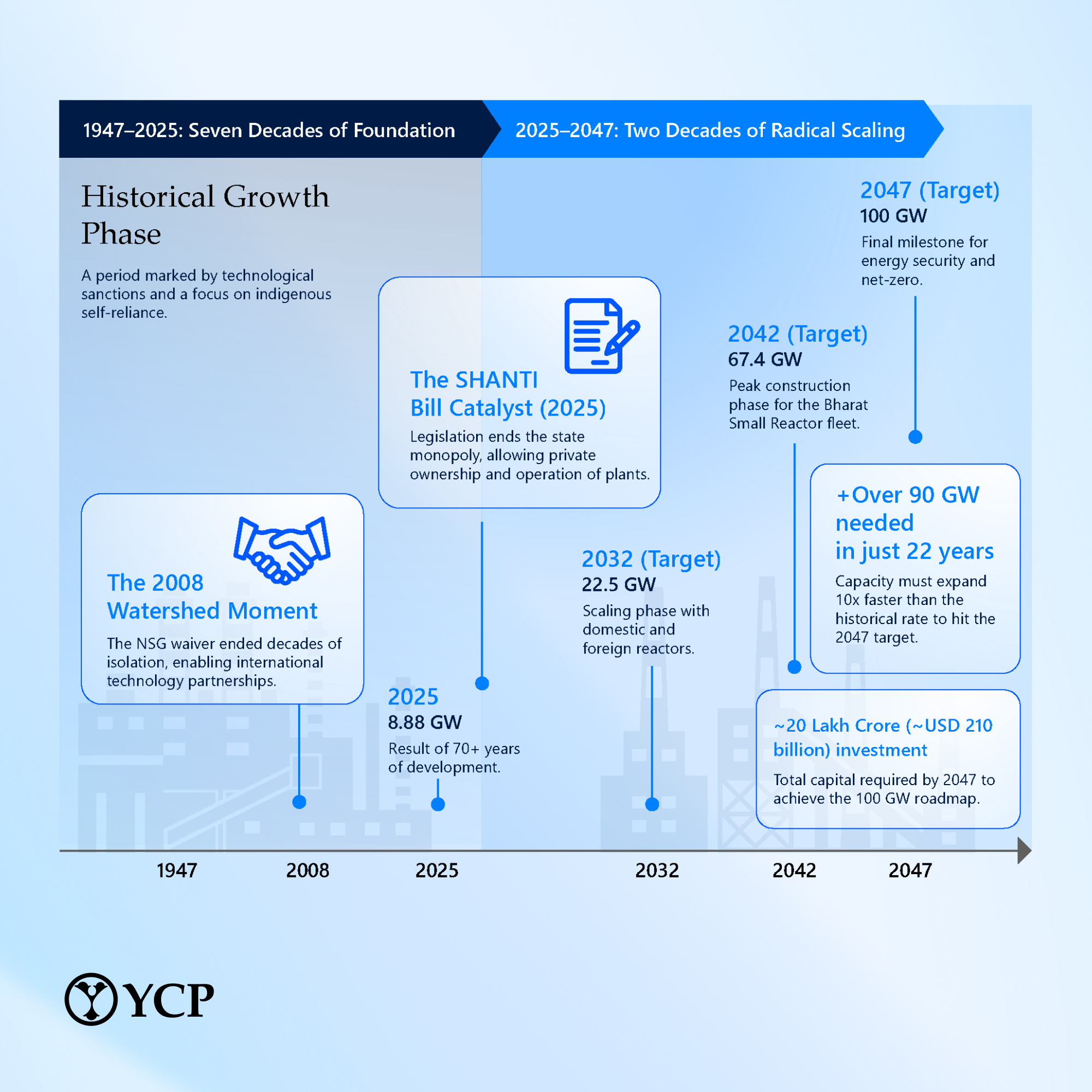
Drawing on global case studies, the white paper outlines key conditions for successful private participation, including revenue stability, clear liability frameworks, and regulatory strength. It also examines global lessons, such as the US’ nuclear private ownership model and Canada’s nuclear concession model. The report identifies remaining gaps in financing, execution, and policy clarity that will shape how quickly the sector can scale.
“India’s nuclear sector is moving from a strategic program to a commercial platform,” says Ankit Hoshing, Partner at YCP India. “The opportunity is clear, but its pace will depend on how quickly a viable investment ecosystem takes shape.”
Click here to read the full white paper on YCP’s website.