NEW YORK, APRIL 2026 – YCP has released a new white paper titled “Resilience by Design: A Strategic Playbook for Nearshoring, Friend-Shoring and Regional Supply Networks.” The report examines how global supply chains are being reshaped in response to disruption and uncertainty, with a growing focus on supply chain resilience.
Over the past five years, a series of shocks, including the COVID-19 pandemic, geopolitical tensions and climate-related events, has exposed structural vulnerabilities in highly globalized supply networks. In response, organizations are reassessing traditional models built on cost efficiency, shifting toward approaches that prioritize resilience, flexibility and supply chain risk management.
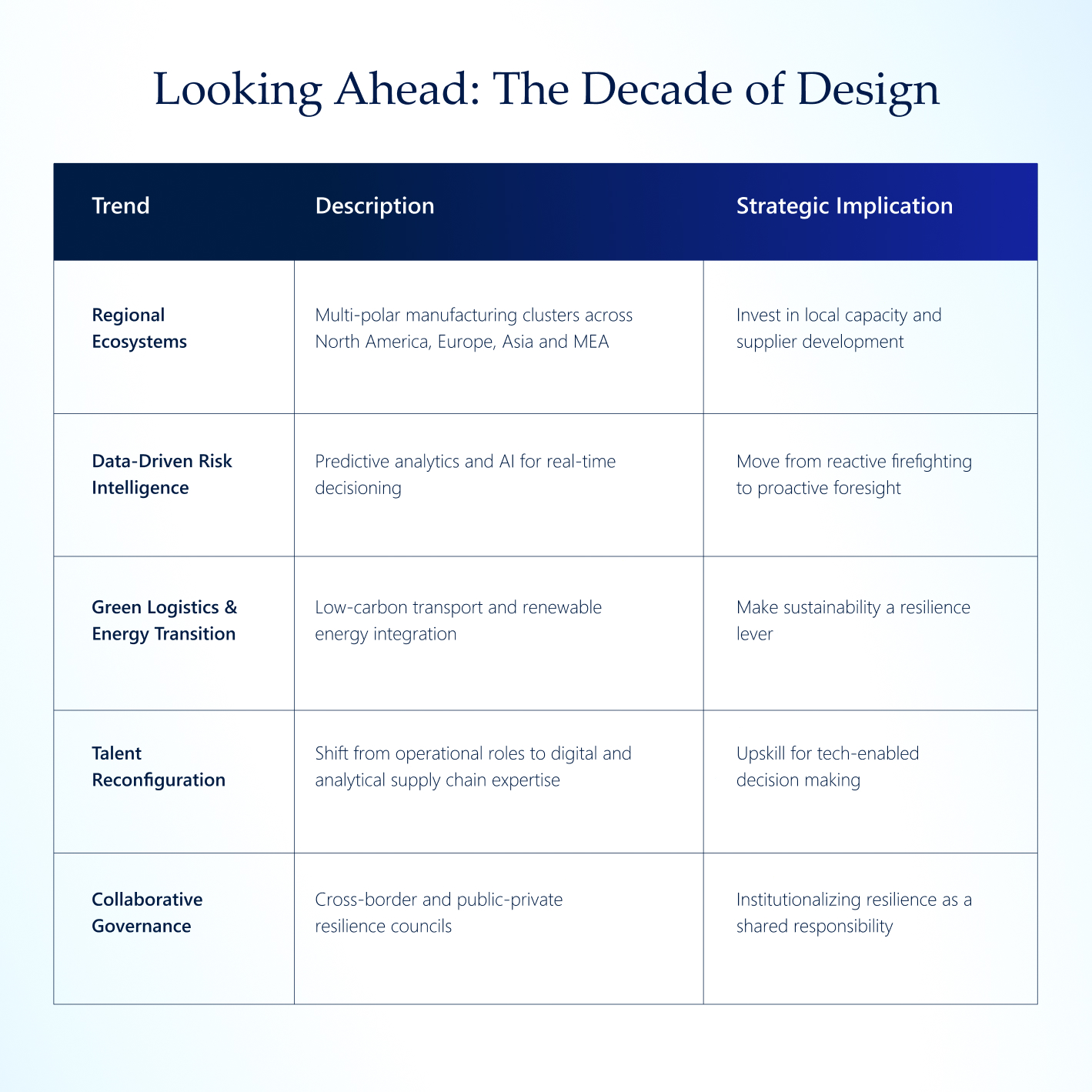
The white paper outlines how companies are transitioning toward more regionalized, multi-local supply ecosystems, balancing global coordination with greater control and adaptability at the regional level. It examines the growing adoption of nearshoring, reshoring manufacturing, and friend-shoring strategies, alongside the increasing importance of end-to-end visibility and risk monitoring across multi-tier supply chains.
The report also presents a shift in decision-making frameworks, from total cost of ownership to total cost of risk, reflecting the need to account for disruption exposure, lead-time variability and regulatory uncertainty. It further identifies global supply chain trends influencing the future of supply chain management.
“Resilience is not a defensive stance; it is a tactical advantage,” says Saurabh Mehta, Managing Partner and CEO of the Supply Chain Solutions Division at YCP. “By elevating procurement from a cost center to a strategic architect, organizations can build durable competitive advantages rooted in speed, stability and strategic independence.”
Drawing on global case studies across industries such as semiconductors, automotive and electronics, the paper illustrates how leading organizations are redesigning supply networks to improve responsiveness, strengthen continuity and support long-term performance.
Click here to read the full white paper on YCP’s website.