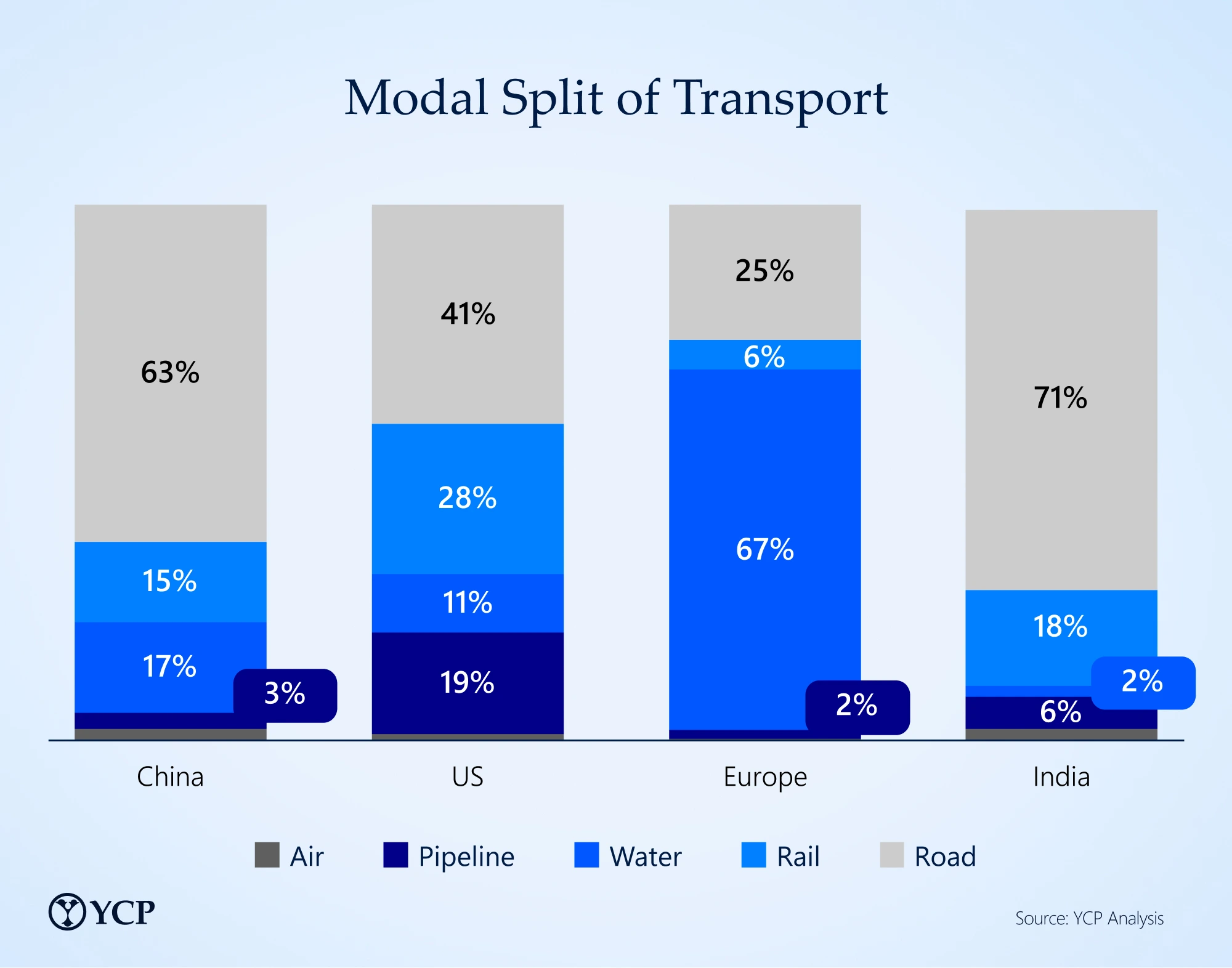
Road transport carries approximately 71% of India’s freight, giving it a far larger role in the country’s logistics system than railways or waterways. Roads remain indispensable for flexible first- and last-mile access, but heavy dependence on them creates efficiency challenges for the Indian logistics industry. As YCP’s white paper, “India’s Logistics Industry: Mapping Growth and Value Creation Pathways,” highlights, heavy reliance on road freight contributes to lower fleet utilization, congestion, and elevated logistics costs.
Sustaining India logistics market growth will therefore require more than expanding highways or adding trucks. It will depend on a multimodal backbone that connects roads with railways, ports, cargo terminals, and logistics parks, allowing each mode to serve the journeys it can handle most efficiently.
Why Road Dependence Limits Efficiency
Road freight is well suited to short-distance transport and destinations that require direct access. It becomes less efficient, however, when it serves as the default option for long-distance and bulk movements that railways or waterways could handle at greater scale. Trucks remain committed to longer journeys, return loads are not always available, and operating costs become more exposed to fuel prices and congestion along major corridors.
The challenge is therefore not road transport itself, but the lack of practical alternatives within an integrated network. Railways and waterways may offer lower-cost options for suitable cargo, yet businesses cannot use them effectively without reliable terminals, storage facilities, and first- and last-mile road connections.
Building Connections Rather Than Isolated Assets
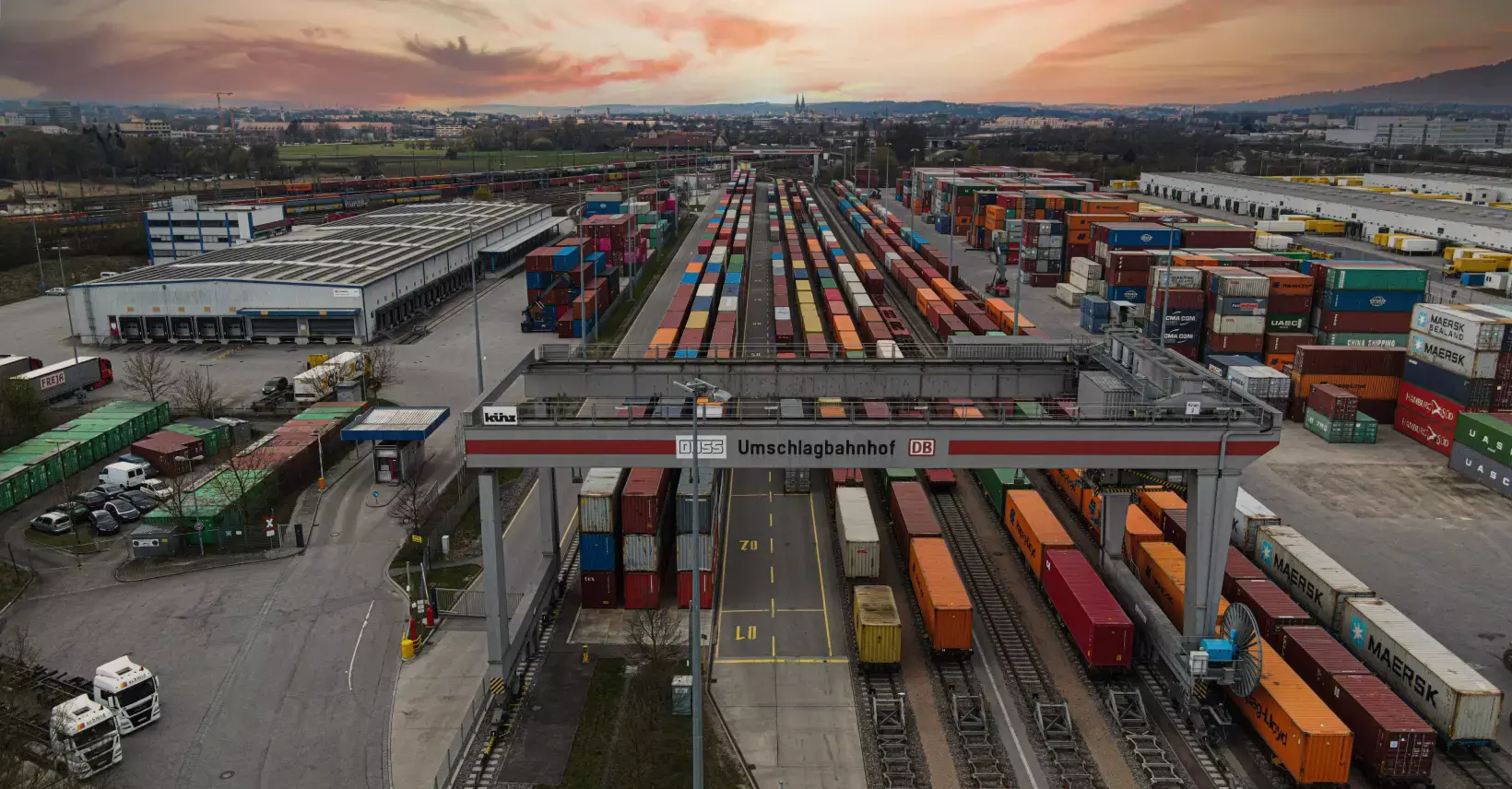
The logistics infrastructure in India is developing already points toward a more integrated model. The white paper identifies Dedicated Freight Corridors and a planned network of 35 multimodal logistics parks as key initiatives supporting this transition. Together, they are intended to expand rail freight capacity and improve connections between transport, storage, and distribution. Port-linked cargo terminals and private rail sidings can extend those connections to trade gateways and manufacturing clusters.
Individually, these projects add capacity. Their greater value, however, comes from how they work together. A rail terminal with weak road access or limited storage may simply move the bottleneck elsewhere in the journey.
For companies evaluating India supply chain investment, the central question is therefore not only whether an asset has sufficient capacity. It is also whether that asset connects efficiently with production centers, consumer markets, ports, and first- and last-mile networks. Multimodal infrastructure creates value when freight can transfer between modes with minimal delay, uncertainty, and additional handling.
What This Means for Businesses
The logistics sector opportunities India presents extend beyond constructing new assets. For manufacturers and shippers, emerging freight corridors create a reason to reassess transport routes and facility locations. The practical test is whether switching part of a journey to rail or waterways improves total delivered cost and reliability after accounting for transfers, storage, and local road transport.
Logistics providers, meanwhile, can build services around these connections. Partnerships with terminal operators and rail service providers can help them coordinate cargo movements across modes, with clear responsibility for schedules, handoffs, and delivery performance.
For developers and investors, the white paper emphasizes disciplined demand assessment. A promising location still requires scrutiny of nearby industrial activity, expected cargo volumes, competing facilities, and the pace at which customers will adopt the service. This means testing whether projected demand will materialize as connecting infrastructure becomes operational, rather than assuming that wider market growth will automatically fill a new terminal or logistics park.
Turning Connectivity Into Performance
The Indian logistics market outlook makes a strong case for expanding infrastructure, but businesses will judge progress through lower delivered costs and more dependable journeys. Connecting transport modes is essential to achieving those outcomes. The priority is to make rail and waterways practical options for suitable freight while preserving road transport’s reach and flexibility.
Download YCP’s white paper, “India’s Logistics Industry: Mapping Growth and Value Creation Pathways,” to explore the infrastructure opportunities and strategic considerations shaping this transition.