In asset-intensive energy operations, productivity losses are not always due to a lack of effort, commitment, or technical ability. More often, performance is lost when the operating model around the workforce is unstable.
This case study examines how a global integrated energy company identified this issue. Despite having formal processes, established planning routines, maintenance systems, and experienced leadership, the organization experienced significant productivity losses. A systematic diagnostic identified the root causes and quantified the opportunity: USD 25 million in potential improvement in Year 1.
Operating Model Instability Driving Productivity Losses
The organization faced recurring performance challenges due to the following:
Escalating maintenance and inspection pressure
Frequent equipment break-ins
Low productive work time (wrench time)
Planning instability and schedule delays
Production deferment
Unplanned operational disruptions
The root cause was operating model instability. Most performance losses occurred upstream in planning and readiness rather than during execution. A diagnostic examination of processes, systems, data, and organizational behavior identified opportunities for improvement to stabilize operations and protect reliability and integrity.
The Diagnostic Approach: Working Backwards from Execution
YCP Renoir conducted a four-week diagnostic evaluation to systematically assess processes, systems, data, and organizational behavior. The methodology and results are as follows (this is a non-exhaustive list):
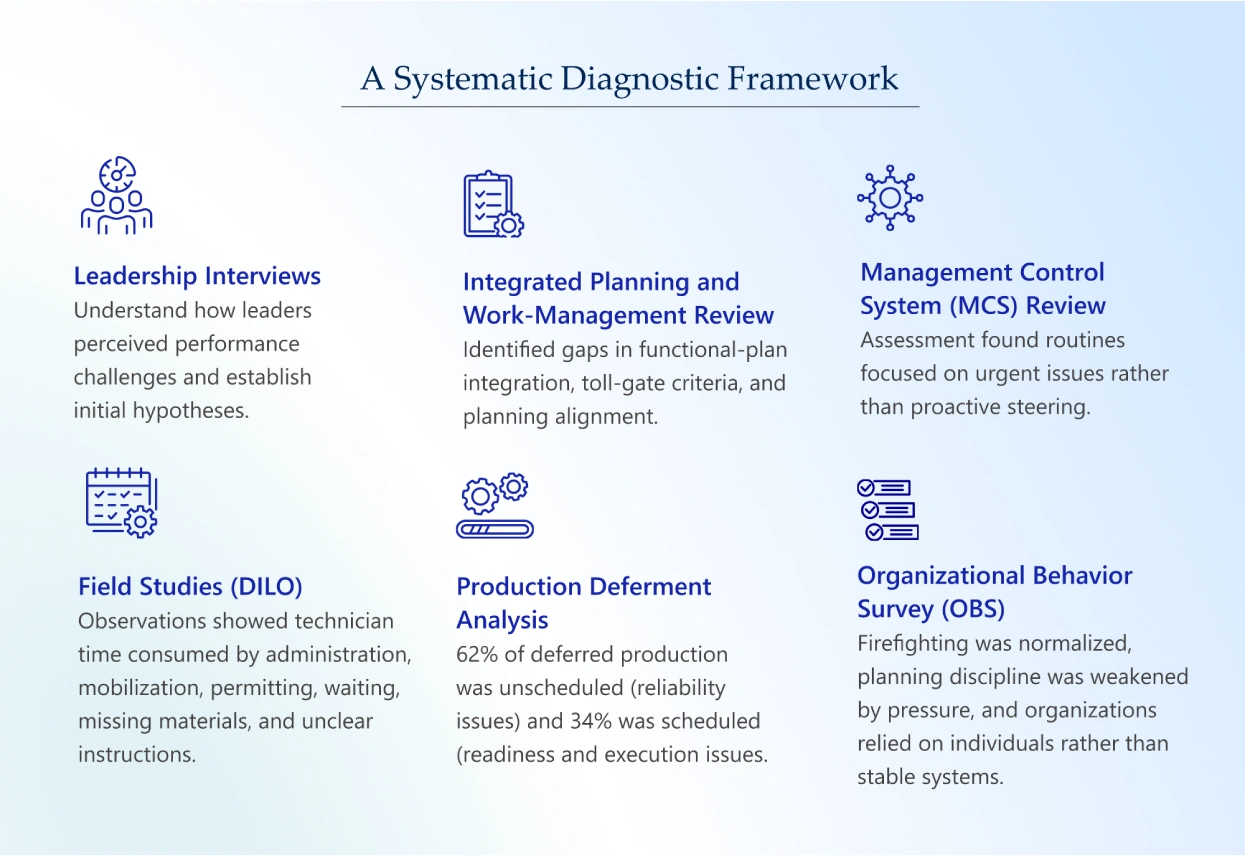
After the diagnostic evaluation, it became clear that the challenges were due to a broader business issue. The company’s operating model was not stable enough to reliably protect the integrity of its execution performance and productivity.
Implementation Project Roadmap
The diagnostic pointed to five practical implementation workstreams.
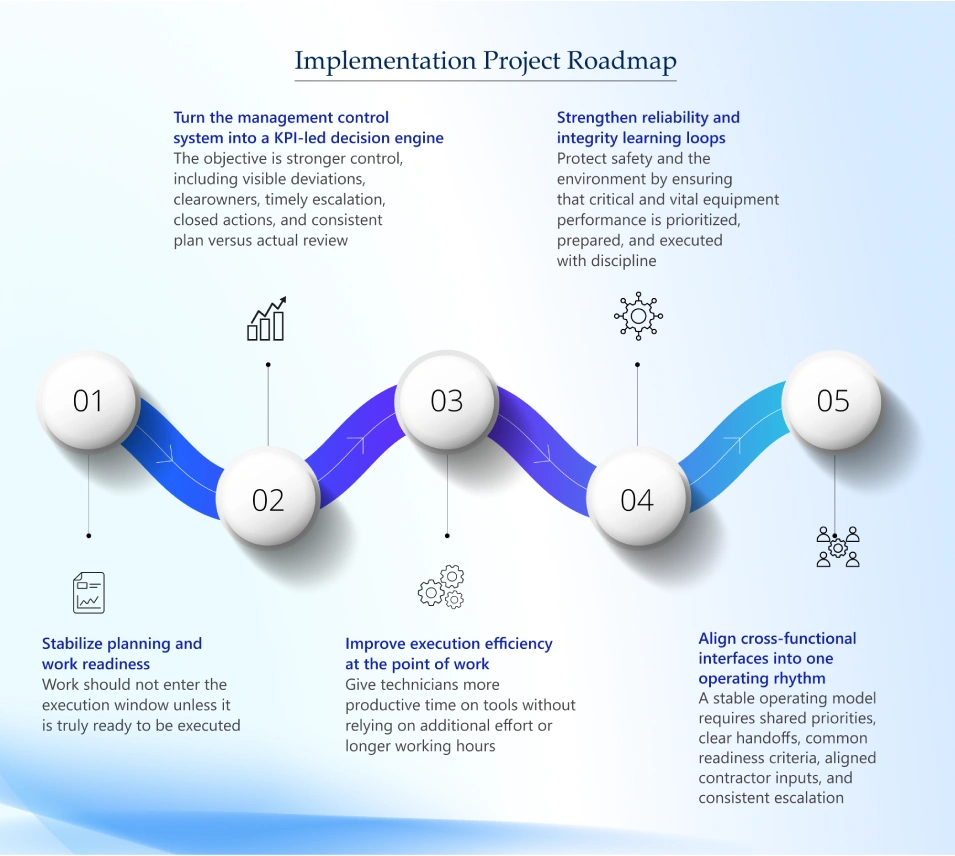
Implementation begins with strengthening the front end of work execution, including work validation, prioritization, gatekeeping, work package quality, scheduling discipline, and readiness of materials, permits, and contractors. Feedback loops are established from execution into future planning.
Next, the Management Control System (MCS) is redesigned to consistently reinforce performance outcomes through meetings, reports, Key Performance Indicators (KPIs), escalation paths, action logs, and decision rights.
Third, activity losses that constrain wrench time are reduced through improved morning mobilization, permit readiness, material staging, clear instructions, daily plan communication, ready-to-go backlog capacity, supervisor routines, and faster issue resolution.
Then, the organization strengthens Root Cause Analysis (RCA), recurrence tracking, preventive action quality, backlog prioritization, and cross-asset learning to shift from restoring functionality to preventing repeat failures.
Lastly, Drilling and Wells (D&W), Engineering and Construction (E&C), Contract and Procurement (C&P), Logistics Support Operations (LSO), contractors, campaigns, and technical modifications are integrated into the same planning and readiness rhythm.
Where Improvements to Operating Model Stability Can Bring Hidden Financial Value
The analysis identified a production-deferment reduction of USD 25 million in Year 1. However, this estimate does not account for backlog reduction or wrench time value, as the additional maintenance work hours have not yet been monetized. Therefore, the financial value of the USD 25 million may increase when the implementation baselines and targets are validated.
This case demonstrates that operational instability in asset-intensive energy operations starts from gaps in the operating model. A systematic diagnostic approach that works backwards from execution can identify these gaps, quantify their impact, and establish the basis for sustainable improvement.
The opportunity typically exists in planning, readiness, and control disciplines upstream. Addressing these upstream factors creates the foundation for reliable, repeatable execution performance.
For organizations facing similar challenges, such as frequent disruptions, reactive maintenance, planning instability, and low wrench time, a structured diagnostic examining operating model stability can pinpoint where value is hidden and what changes are needed to improve your organization.