The Oil & Gas sector is shifting rapidly, with changes accelerating in recent years. Running an energy company through this level of volatility is demanding enough. For a state-owned energy company like PT Pertamina (Persero), one of Indonesia’s most strategically important companies, the stakes of navigating this transition are significant.
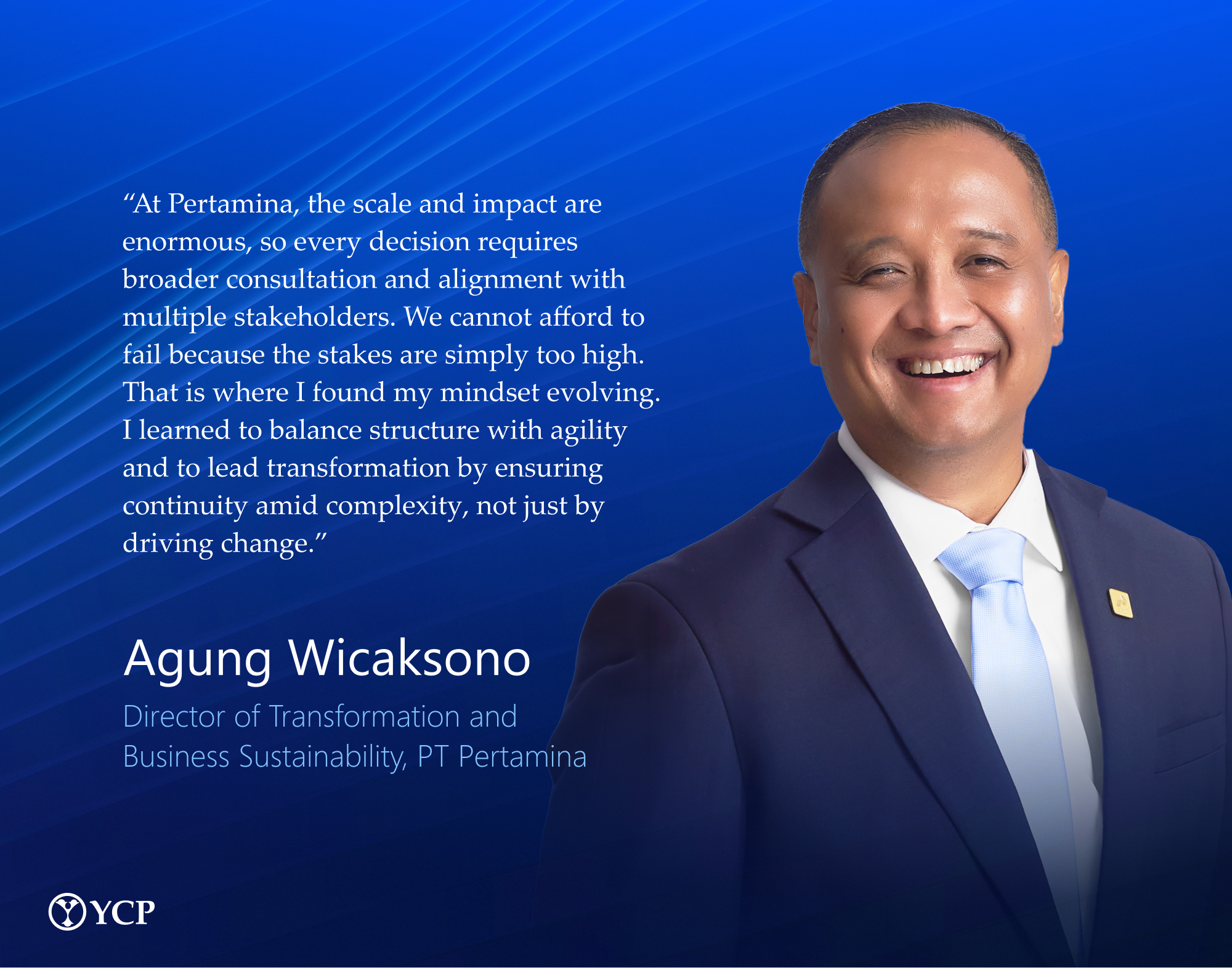
When Agung Wicaksono took the helm as Pertamina's Director of Transformation and Business Sustainability in June 2025, the direction was to begin with the most immediate priorities and expand from there. The mandate is broad: to restructure, streamline, and develop simultaneously within a company operating in a highly critical sector.
Agung brings experience from several transformation-focused roles in Indonesia, including at MRT Jakarta and PT Jababeka Tbk, where he was involved in initiatives related to strategic transformation.
YCP Southeast Asia CEO and Managing Partner Karambir Anand recently sat down with Agung for a conversation that touched on some of the most critical questions facing the energy sector today, from Pertamina’s energy transition strategy to its role in shaping the ASEAN energy landscape, to the company's production of sustainable aviation fuel (SAF). The discussion also touched on Agung’s personal perspective on the legacy he hopes to build.
The Role of Pertamina and Indonesia in the ASEAN Energy Landscape
Karambir Anand: What role should Indonesia — and Pertamina specifically — play in shaping the ASEAN energy system?
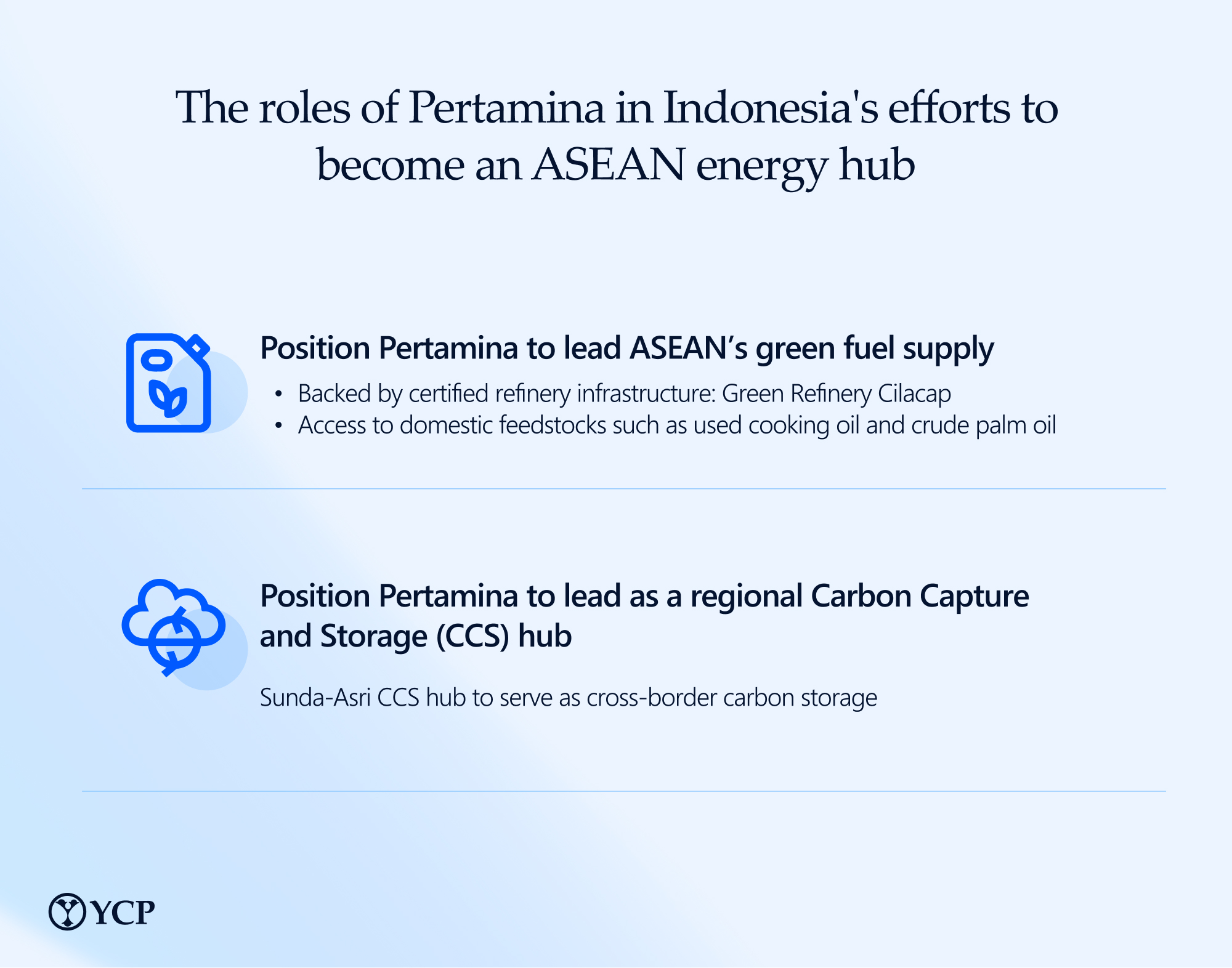
Agung Wicaksono: For Indonesia to become ASEAN’s energy hub is not automatic, and it requires an anchor. That anchor is Pertamina, and it depends on how effectively the company translates Indonesia's natural advantages into scalable, investable, and operationally sound businesses.
Two roles define this ambition: first, as a regional Sustainable Aviation Fuel (SAF) hub, and second, as a regional Carbon Capture and Storage (CCS) hub. Both roles point to the same conclusion: Indonesia's position as ASEAN's energy hub is inseparable from Pertamina's ability to execute.
Energy Transition and the Road Ahead
Karambir Anand: What differentiates Pertamina’s energy transition strategy from global peers?
Agung Wicaksono: President Prabowo Subianto’s goal is to achieve 8% GDP growth. However, rapidly increasing energy costs could shock industry and households, resulting in a decline in growth.
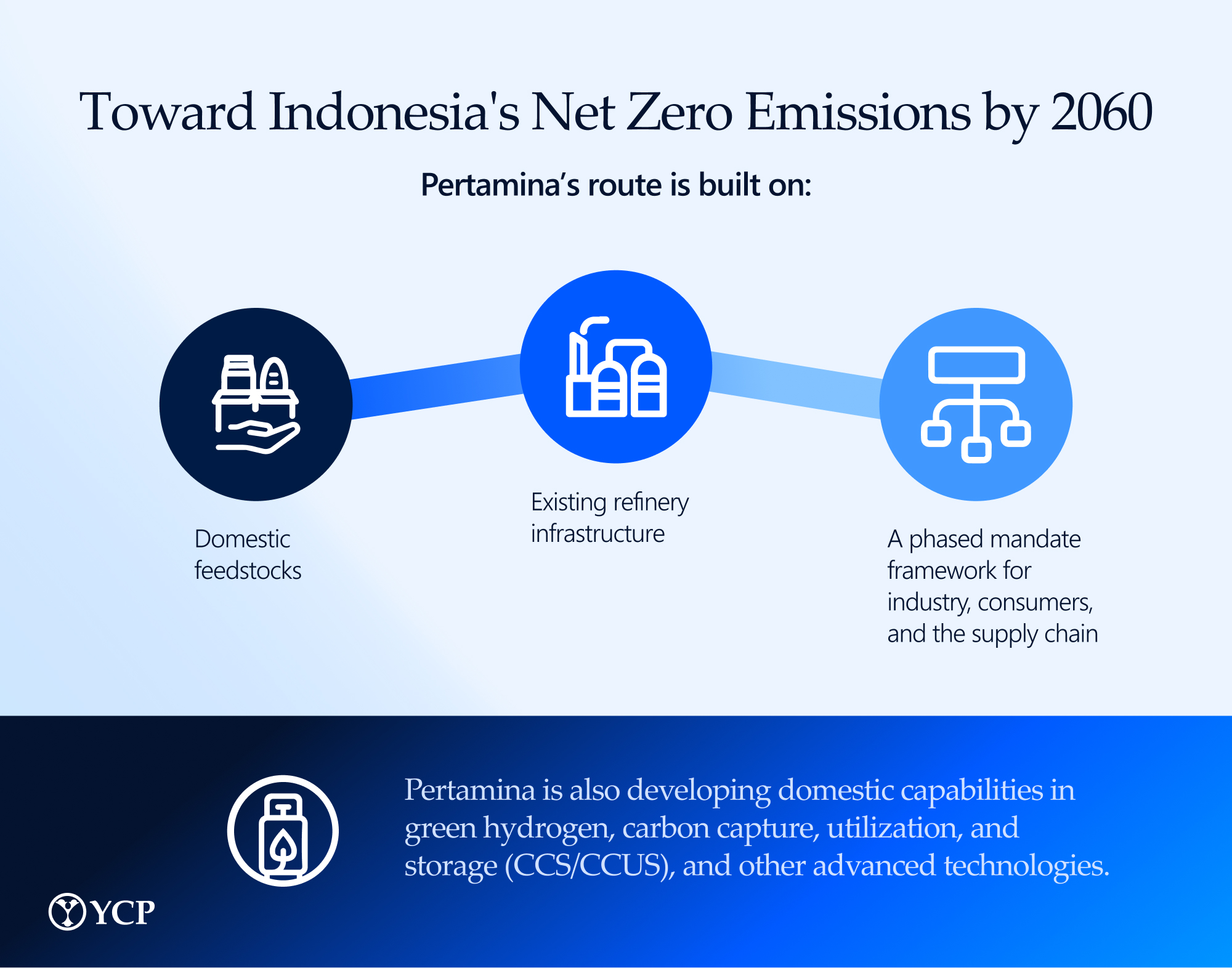
Therefore, Indonesia and Pertamina cannot simply import another country’s model for their transition path. We need a phased transition grounded in Indonesia's own resources that will bridge legacy fuels with green energy. As Pertamina builds capacity, it is aligning with Indonesia’s transition, which is shaped by Indonesian reality rather than by the assumptions of a Western energy model.
Pertamina’s Strategic Transformation
Karambir Anand: Pertamina sits at the intersection of national energy security and global decarbonization. How are you redefining the company’s core identity over the next decade?
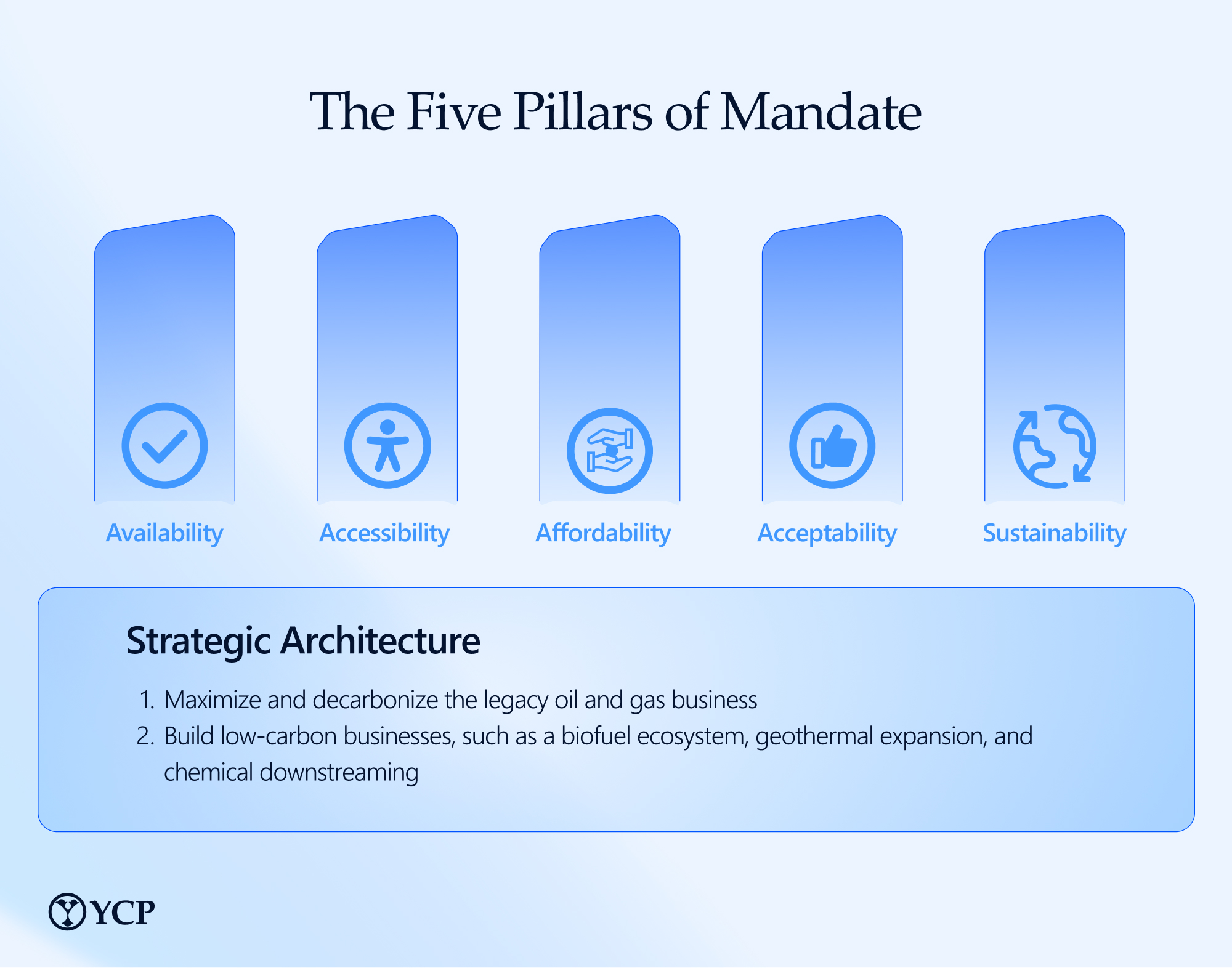
Agung Wicaksono: The strategic architecture for the next decade is the Dual Growth Strategy — Track 1: Maximize and decarbonize the legacy oil and gas business. Track 2 is to build low-carbon businesses, such as a biofuel ecosystem, geothermal expansion, and chemical downstreaming.
Over the next decade, we will strengthen our role as an active driver of national economic development. For instance, when we establish a supply chain for converting Used Cooking Oil (UCO) into SAF, we will be doing more than producing fuel; we will be creating a new domestic circular economy and a new export-quality green fuel that will earn Indonesia a place in the global energy transition conversation.
Karambir Anand: What are the two to three no-regret moves Pertamina must execute in the next 24 months in a rapidly shifting energy landscape?
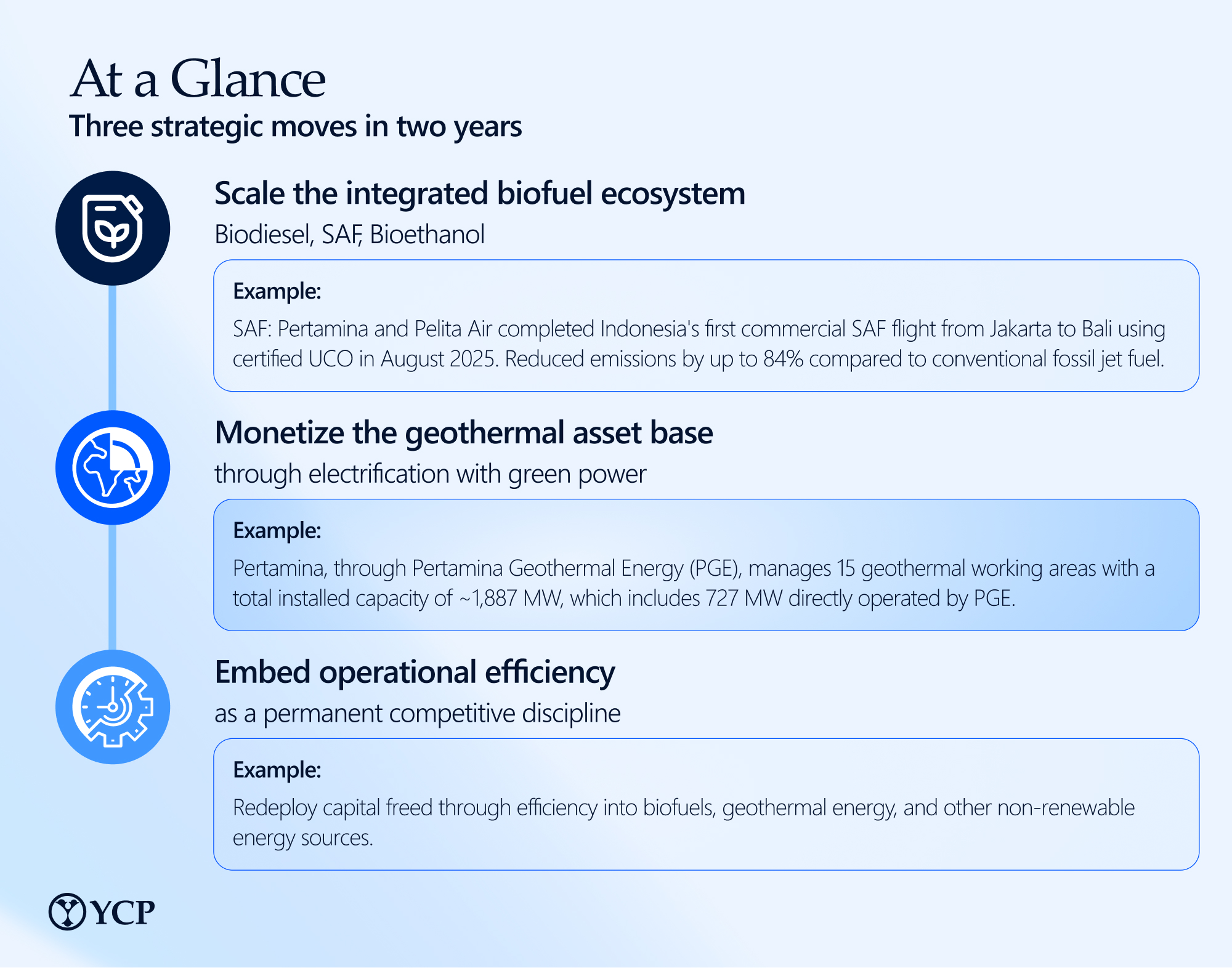
Agung Wicaksono: The first step is to scale the integrated biofuel ecosystem, including biodiesel, sustainable aviation fuel (SAF), and bioethanol. Second, monetize the geothermal asset base through electrification with green power. Third, embed operational efficiency as a permanent competitive discipline because efficiency funds the transition.
Expanding Pertamina’s Portfolio and Strategic Investment
Karambir Anand: What types of partnerships (global majors / financial investors / technology players / etc.) will be most critical to accelerate Pertamina’s transformation?
Agung Wicaksono: All three types of partnerships are important, but each serves a different function in our transformation. Offtake and commercial partners validate market demand. Financial investors mitigate the risk of capital deployment. Technology partners close capability gaps.
However, there is a fourth partnership category that is equally critical yet often overlooked: law enforcement and legal oversight institutions. As a state-owned enterprise operating under a demanding compliance environment, we must ensure that every major corporate action is properly structured and documented to avoid legal risk in Indonesia’s regulatory landscape.
Building a Full Ecosystem around Sustainable Aviation Fuel
Karambir Anand: You’ve spoken about building a full ecosystem around SAF. What does ‘winning’ look like in this space – regional leadership, global exports, etc.?
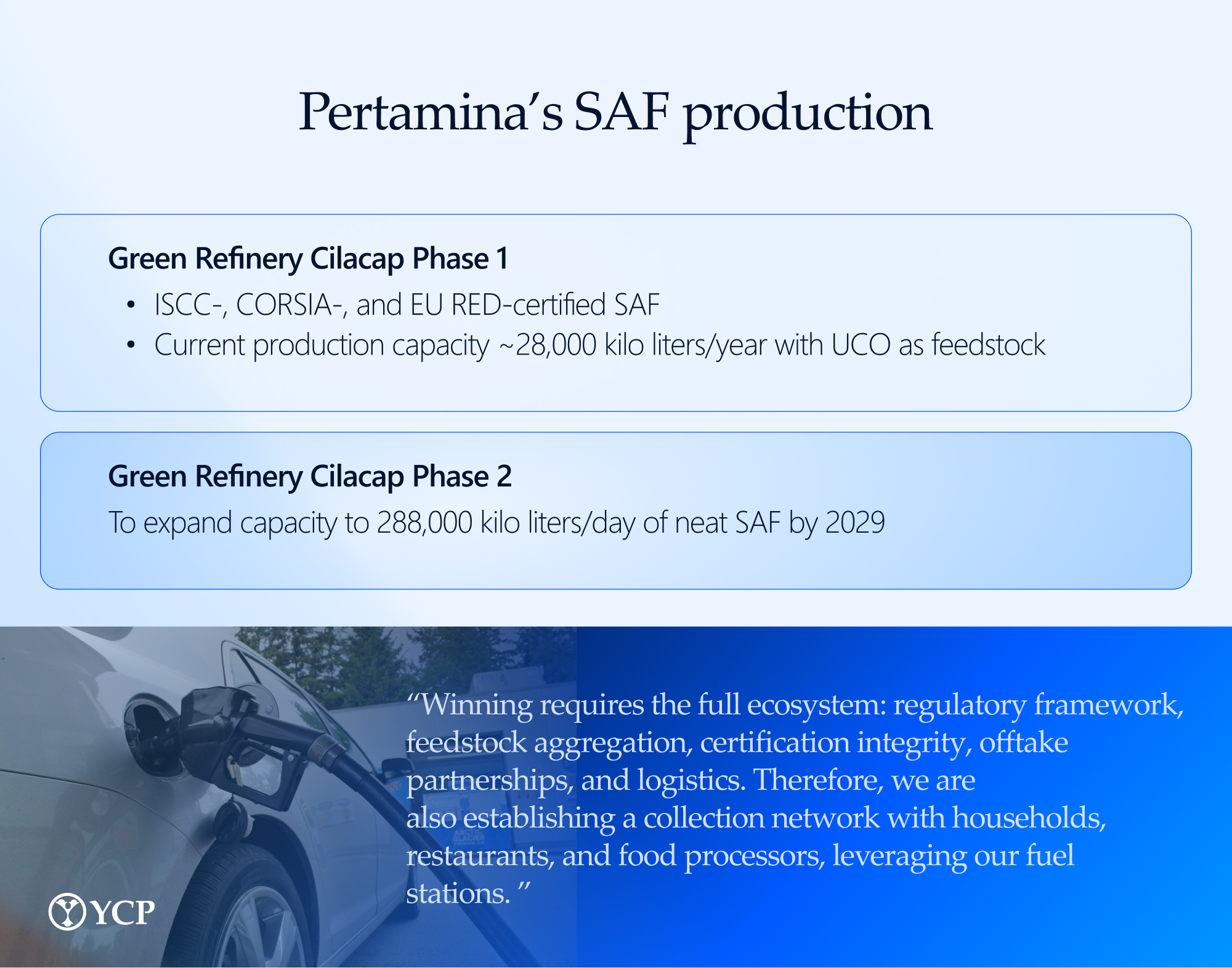
Agung Wicaksono: Winning is not only to become a domestic SAF producer, but also to establish Indonesia as the regional SAF supply hub for ASEAN, providing other airlines with access to certified, globally-accepted SAF. Indonesia has the necessary structural elements to achieve this goal.
Our SAF already meets ISCC-, CORSIA-, and EU RED certification standards. Virgin Australia has already used Pertamina SAF for international flights out of Bali. This is an example of regional hub leadership, and we will continue to expand.
Embedding Sustainability in Commercial Decision-Making
Karambir Anand: How do you ensure sustainability is embedded into commercial decision-making?
Agung Wicaksono: Sustainability must speak the language of business — numbers and bottom line, not narrative and ESG score. While this sounds simple in principle, it is difficult to implement.
To begin, our goal is to establish a framework in which every new investment appraisal includes a shadow carbon price. This makes high-emission projects look more appealing on an Internal Rate of Return (IRR) basis, rather than just on an ESG report. We are also embedding sustainability KPIs in BOD and BOD-1 scorecards in the form of ESG initiatives, ESG rating scores, emissions reduction, and net zero emissions (NZE) roadmaps.
We are making progress towards International Financial Reporting Standards (IFRS) S1 and S2 in our Sustainability Report. After all, you cannot claim that sustainability is embedded in decision-making if you cannot measure and report it using the same method applied to financial results.
Workforce Transformation: Generation Y and Generation Z
Karambir Anand: More than 60% of Pertamina’s workforce is Gen Y and Z. How are you building a culture where they own the change?
Agung Wicaksono: We need to treat Gen Y and Z as agents of transformation, not recipients of it. In practice, we must create real opportunities for them. This means giving early-career employees cross-functional assignments that expose them to strategic decisions, not just functional tasks. They should have direct access to senior leadership and open communication with them. We also need to reverse learning across generations because knowledge should flow both ways in this organization.
Legacy and Impact
Karambir Anand: When you look back in 10 years, what legacy would you like to have built?
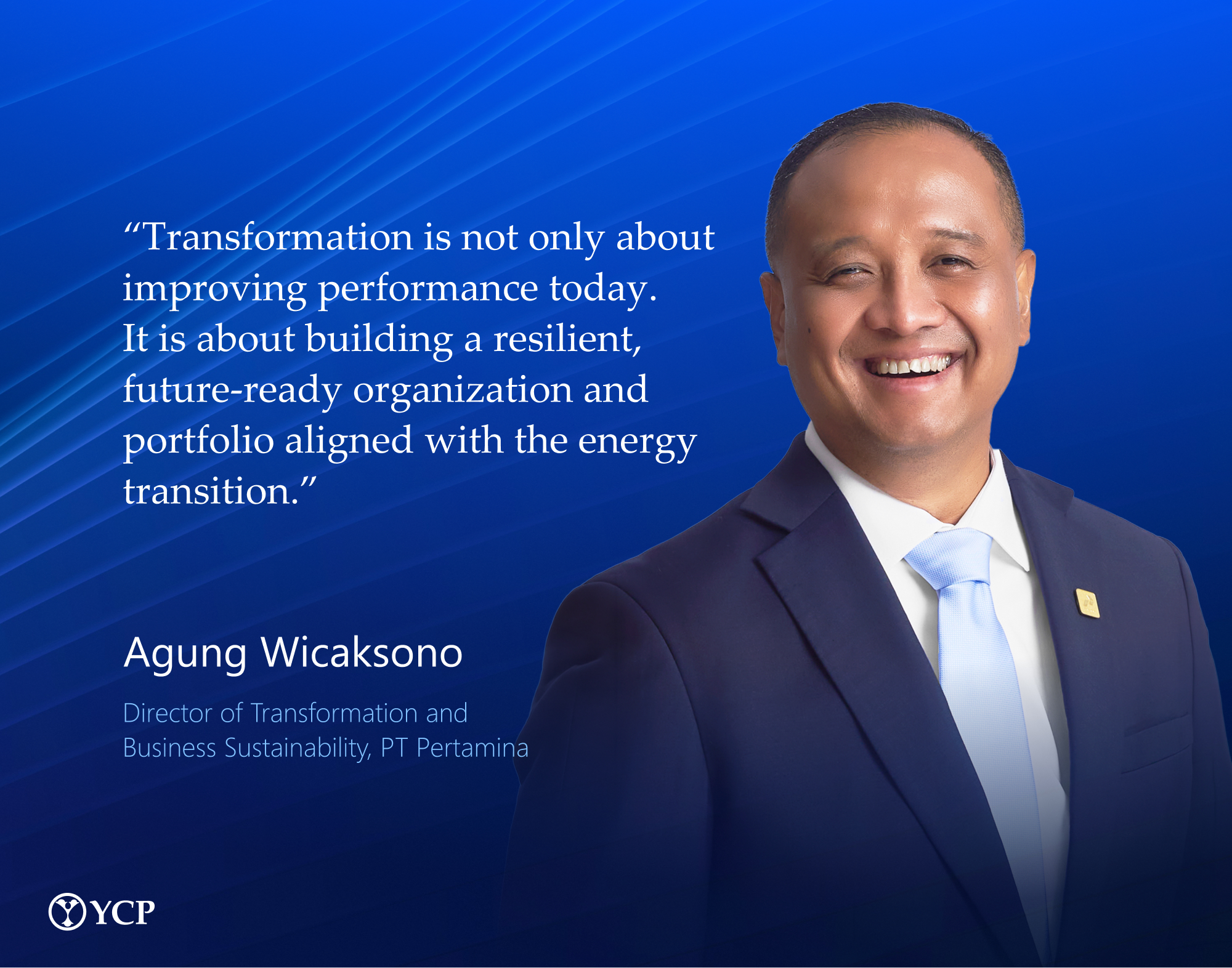
Agung Wicaksono: I would like to contribute to a transformation where Pertamina evolves into a stronger and more resilient energy company. This is not just about restructuring organizations, but about reshaping how we create value. But I see this as a collective journey because the real legacy is not built by one person, but by all Perwira who are willing to adapt, take ownership, and continuously improve the company from within.